
 blog
blog
Boxing vs Martial Arts for Street Self-Defense
Table of Contents
- Boxing vs Martial Arts for Street Self-Defense: The Core Differences
- What Boxing Trains You to Do
- What Martial Arts Add to the Equation
- Sport vs Street Self Defense Training: Why the Ring Changes Everything
- Striking, Grappling, and Clinch Work: What Actually Works on Concrete
- How Long to Learn Effective Self Defense (And What Slows You Down)
- Kajukenbo Self Defense Benefits for Busy Professionals
- Legal Implications of Self-Defense: What You Need to Know Before You Train
- Conclusion
- Frequently Asked Questions
Last Updated: October 3, 2026
Boxing vs Martial Arts for Street Self-Defense: The Core Differences
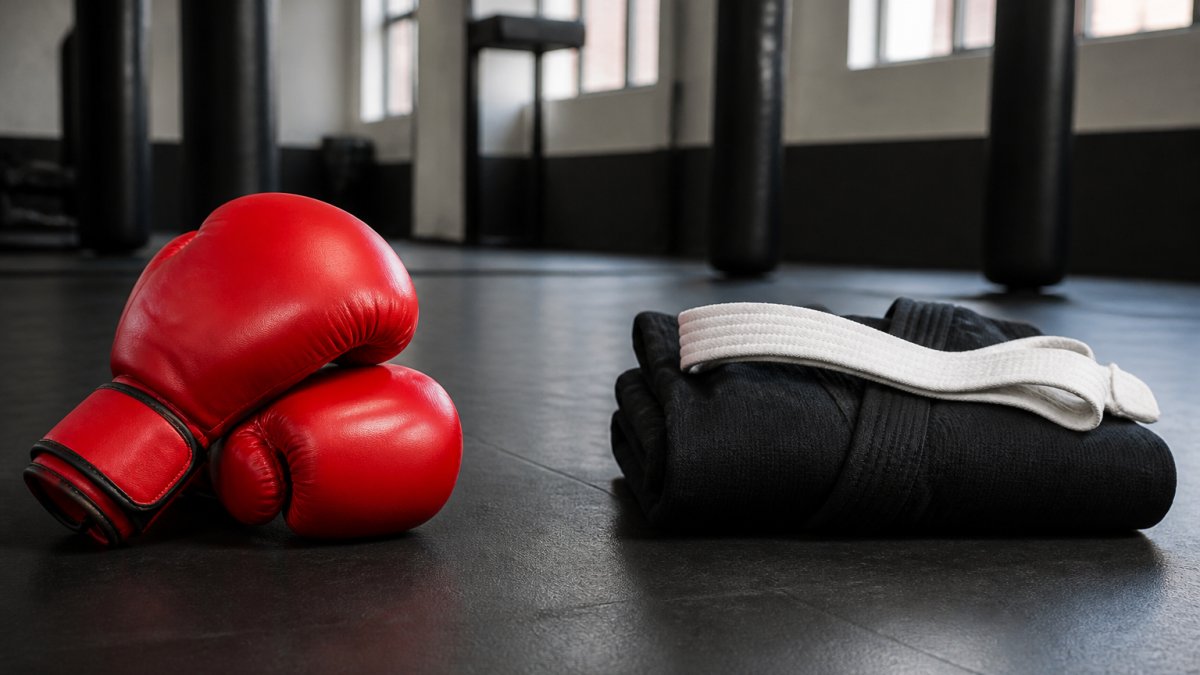
Boxing vs martial arts is not a fair fight on paper, because they train for different arenas. Boxing is a combat sport built around gloved punching under rules.
This guide breaks down what each system trains, where sport rules leave gaps, and how long real skill takes to build, including the legal side most guides skip.
Here is the uncomfortable truth most gyms avoid: a street fight has no referee, no weight class, and no rules.
What Boxing Trains You to Do
Boxing builds elite hand strikes, head movement, and footwork.
What boxing does not train is the ground. No takedown defense. No clinch work beyond tying up. No answer for a knife or a second attacker.
Boxing also drills under a specific rule set: no elbows, knees, or grabs. The habits you build are shaped by rules that vanish on concrete.
- Sharp hand strikes and combination punching
- Head movement and defensive posture
- Footwork and distance management
- Reaction time under pressure
That list is genuinely valuable. It is just incomplete.
What Martial Arts Add to the Equation
Martial arts add the missing pieces: grappling, clinch work, and weapons awareness. Systems like Kajukenbo blend striking, throwing, and joint locks into one curriculum.
The word "martial arts" covers a huge range, though. A sport taekwondo school and a combat-focused Kajukenbo program share a name but not a purpose.
What matters is pressure testing. If you never spar or run fight simulation, your techniques stay theoretical, a punch never thrown against resistance will not show up when you need it.
National Institute of Justice research on use-of-force and self-defense
Sport vs Street Self Defense Training: Why the Ring Changes Everything
Sport vs street self defense training comes down to one thing: rules. A ring has a referee, a mat, a weight class, and a bell. The street has none. The deeper problem is that rules quietly install habits you default to under stress, the wrong ones when the bell never rings.
The Habit-Transfer Problem
Under pressure, your brain falls back on the most rehearsed pattern, not the smartest one. A boxer who has thrown tens of thousands of jabs behind a high guard will reach for that guard when a stranger squares up. On a sidewalk that means both hands protect the head while your balance, your exit, and a second attacker go unmanaged.
What the Rules Quietly Remove
Consider what a standard boxing or sport-karate rule set strips out of your training environment:
- No takedowns, so you never drill sprawling or underhook defense against a shot
- No multiple attackers, so you never practice keeping a wall or exit at your back
- No weapons, so you never learn the distance change a blade forces on you
- No concrete, so you never practice falling, standing up, or fighting from a seated position
- No clothing grabs, so you never feel a jacket, hoodie, or collar used against you
- No shoes on the mat, so you never deal with grip loss on tile, gravel, or wet pavement
Each gap is a real risk, not a theoretical one. A trained boxer can still get slammed, surrounded, or cornered. The fix is not to abandon boxing. It is to add what it leaves out.
The Environmental Factor Most Guides Skip
The surface and the space change the math more than most people realize. A deep boxing stance that generates power on canvas becomes a liability on ice, a stairwell, or in a crowded bar.
Clothing matters too. A heavy winter coat slows an attacker's grab but also your hand speed. A t-shirt gives a grappler a clean grip. Shoes with no traction turn a pivot into a fall. None of this shows up in a ring.
How to Close the Gap Without Quitting Your Sport
You do not need to abandon boxing or any sport art. You need to add the missing reps:
- Spar with a partner who is allowed to grab, clinch, and shoot
- Drill escapes from a wall, a corner, and the ground
- Practice the same technique in shoes, on a hard floor, in street clothes
- Add one weapon-awareness drill per week, even a rolled magazine or training knife changes your distance instincts fast
- Rehearse the exit, not just the strike: where is the door, who is behind you, what is between you and out
A sport art plus a small, consistent dose of context training can enhance self-defense readiness. The goal is not to win a fight. It is to get home.
Striking, Grappling, and Clinch Work: What Actually Works on Concrete
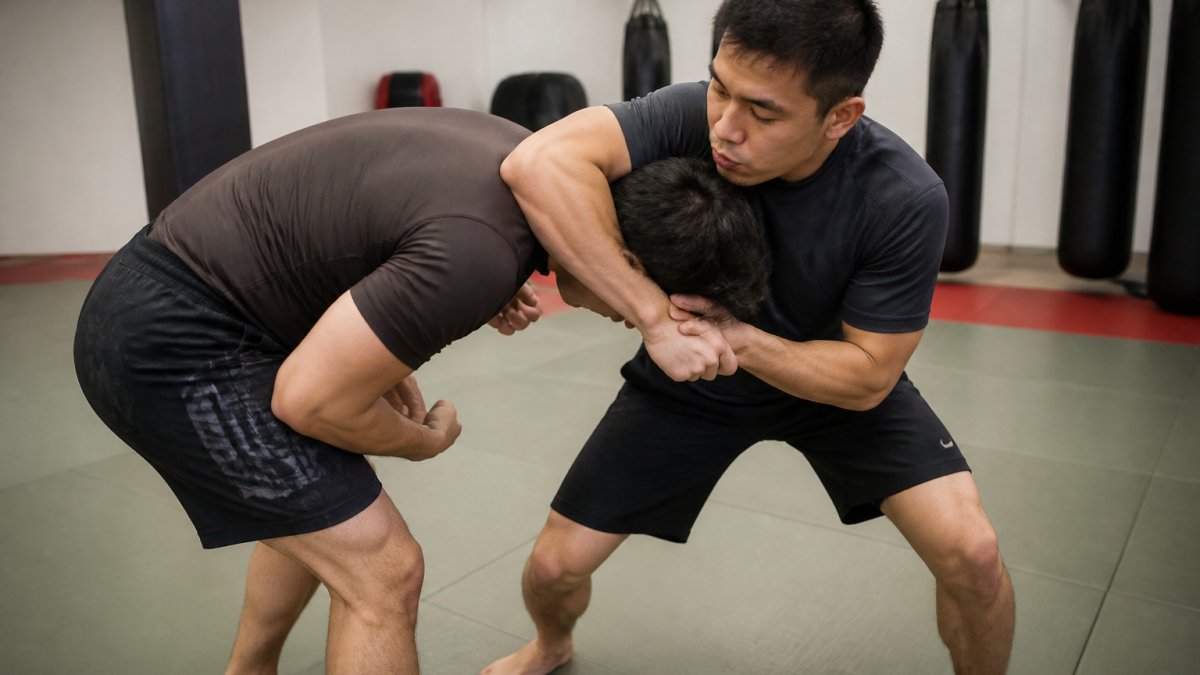
On concrete, the fight usually starts close and ends on the ground, which is why clinch work and takedown defense matter as much as a hard cross. But 'learn to grapple' is a slogan, not advice.
The Four Phases of a Street Encounter
Most street violence moves through predictable phases. Training that ignores any phase leaves a hole:
- The approach. Someone closes distance with intent, talking, posturing, or lunging. This is where situational awareness and de-escalation do their work. If you miss this phase, you start the fight already behind.
- The grab or clinch. Real fights usually begin with a shirt grab, a collar tie, a push, or a bear hug, not a clean jab. Whoever controls the clinch controls the next two seconds.
- The strike or takedown. From the clinch, one person either lands a short strike or drags the other down. This is where boxing's long-range footwork stops helping and clinch mechanics take over.
- The ground or the exit. If you go down, you are on a hard surface with no referee. If you stay up, you should be moving toward an exit, not toward a finish.
Distance Management and Footwork Under Pressure
Distance management is the skill of controlling the space between you and a threat. Good footwork keeps you off the ground and near an exit. Bad footwork traps you against a wall.
Boxing teaches excellent footwork, but only for a ring, no walls, curbs, or furniture. Real environments add obstacles that change how you move.
The practical rule: in the open, use distance and angles. In tight space, use clinch control and short, vertical strikes.
Why Clinch Work Decides Most Fights
Clinch work is the bridge between striking and grappling and the single most under-trained self-defense skill. From a collar tie or over-under you can:
- Break the attacker's posture so their strikes lose power
- Create the frame you need to push off and disengage
- Deny a takedown by keeping your hips back and your base wide
- Land short elbows, knees, and palm strikes that do real damage at contact range
A boxer with no clinch training often does the opposite: ties up, stalls, and waits for a referee to separate them. There is no referee.
Grappling: Useful, But Not a Plan
Grappling matters because if you cannot defend a takedown, you end up on your back on a hard surface, the worst place in a street fight. Concrete causes head trauma a mat never will, and a grounded fighter cannot see a second attacker or a weapon.
So the goal of grappling in self-defense is not to submit anyone. It is to:
- Sprawl and stuff the takedown
- Stand back up if you do go down
- Escape a bad position and get to your feet and to an exit
Sport grappling that teaches you to pull guard or hunt submissions is training for a different problem. On concrete, the ground is a place to leave, not a place to win.
- Striking works if you keep your distance and an exit
- Clinch work decides who controls the fight
- Takedown defense keeps you standing
- Ground fighting is a last resort, not a plan
The street rewards the fighter who controls distance, breaks the clinch, and leaves, not the one who wins the exchange.
How Long to Learn Effective Self Defense (And What Slows You Down)
How long to learn effective self defense depends on method, not just hours. Basic, reliable skills can take shape with consistent training. Deep competence takes years.
A structured, phased approach fixes this: break complex techniques into small steps and master each before adding the next. That is how motor learning works.
Here is what speeds you up:
- Train two to three times a week, not once
- Learn in dated, progressive phases
- Pressure test skills with sparring and simulation
- Focus on a few techniques you can repeat under stress
Busy professionals can improve with consistent training, as the method supports skill acquisition.
Kajukenbo Self Defense Benefits for Busy Professionals
Kajukenbo self defense benefits include a comprehensive curriculum. The system blends striking, grappling, and weapons into one curriculum.
At Kajukenbo and Filipino Martial Arts Club, we teach in progressive, dated phases, so each skill builds on the last.
That background shapes how we teach. We break complex skills into steps your brain can store and recall under pressure. You learn stick and blade concepts the same way: one phase at a time.
- Measurable progress you can track
- Better recall of techniques when it counts
- Complex skills made easier to learn
- A Midtown Manhattan location built for tight schedules
Ask any school one question before you sign up: how do you measure progress?
Legal Implications of Self-Defense: What You Need to Know Before You Train
Self-defense law is the topic almost every training guide skips.
In the United States, self-defense generally requires an imminent threat and only reasonable force to stop it (self-defense | Wex | US Law).
Force that goes beyond what the situation required can be ruled unlawful. That is why de-escalation and situational awareness matter as much as any punch.
Cornell Law School Legal Information Institute on self-defense
We are not lawyers, and this is not legal advice.
- Understand imminent threat and reasonable force
- Know your state's duty-to-retreat rules
- Train de-escalation and situational awareness
- Treat avoidance as a skill, not a weakness
Conclusion
The gap between sport and street is real, and closing it takes the right method, not just more hours. Boxing gives you sharp hands. Martial arts add the grappling, clinch work, and awareness that keep you standing.
At Kajukenbo and Filipino Martial Arts Club, we combine progressive, dated phases with a neuroscience-based approach to motor learning. You get measurable progress, better recall under pressure, and a curriculum that covers Kajukenbo, Balintawak, and Kalis Ilustrisimo.
Frequently Asked Questions
Which is better for self-defense, boxing or martial arts?
It depends on what you need. Boxing builds excellent hand strikes, head movement, and footwork for one-on-one striking exchanges. Martial arts systems like Kajukenbo add grappling, takedown defense, and clinch work, which matter when a fight goes to the ground or an attacker closes distance. For street self-defense, a system that trains all ranges gives you more options than boxing alone.
How long does it take to learn effective self-defense?
Basic self-defense skills like defensive posture, distance management, and a few reliable hand strikes can be learned with consistent training. Reliable performance under pressure takes time, as your brain needs repeated exposure to stress to build automatic responses. Progressive, structured training that includes pressure testing can support skill acquisition.
Can boxing techniques be combined with martial arts for better protection?
Yes. Boxing's striking mechanics, footwork, and head movement transfer well to street self-defense. Adding clinch work, takedown defense, and de-escalation training from a martial arts system covers the gaps boxing leaves. Many self-defense programs build on boxing fundamentals and then layer in grappling and close-quarters combat skills so you are not limited to one range.
What are the legal implications of using self-defense techniques in a street fight?
Self-defense laws vary by state, but most require that your response match the threat and that you had a reasonable fear of imminent harm. Using lethal force is only justified when you face a threat of death or serious injury. Training that includes situational awareness and de-escalation helps you avoid fights entirely, which is the best legal and personal outcome. Consult a local attorney for guidance specific to your state.