 Listicle
Are Focus Strategies Worth It for Busy Professionals?
Last Updated: November 10, 2026
Quick Summary
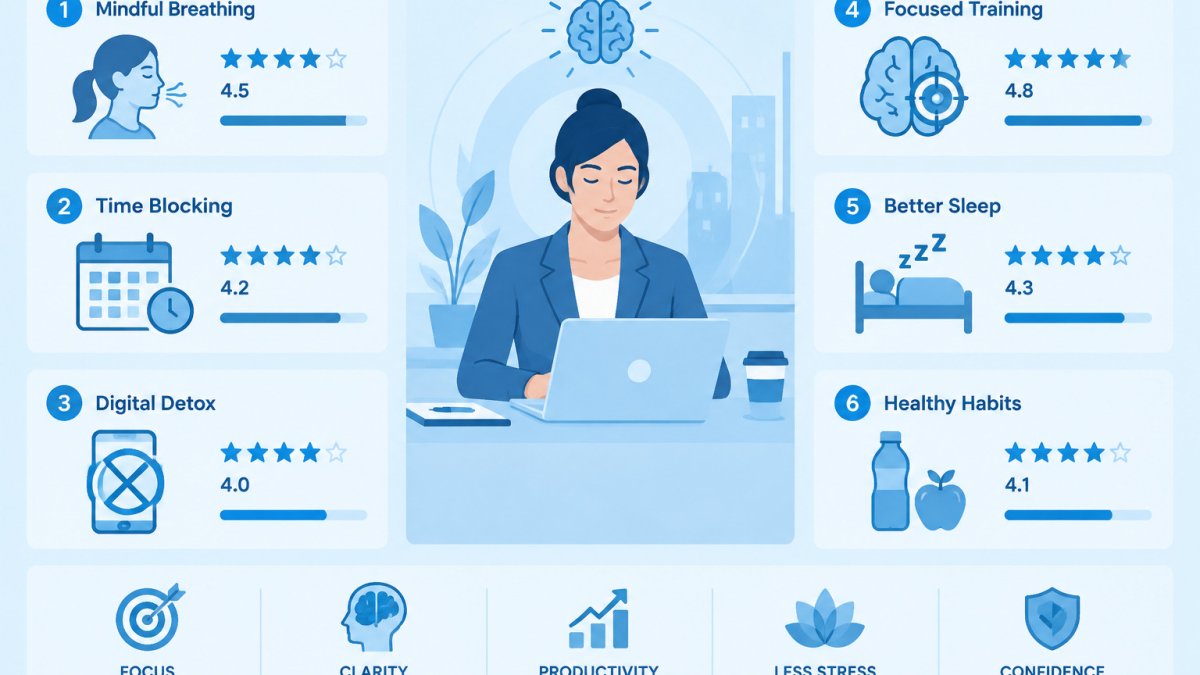
Busy professionals can improve focus by scheduling protected deep-work blocks, cutting digital distractions, and working in structured intervals. Building habits around sleep, movement and daylight also helps. Together these strategies reduce the constant task-switching that drains attention during a demanding workday.
- Block 90-minute sessions on your calendar for your most demanding tasks.
- Turn off badges and banner alerts for email, chat and social apps during focus blocks.
- Try 25 minutes of focused work followed by a 5-minute break, the Pomodoro technique.
- Pick one task at a time, since switching between tasks slows every task down.
- Keep a shutdown routine that writes tomorrow's top three tasks before you leave.
Table of Contents
- Why Busy Professionals Lose Focus So Quickly
- 1. Schedule Protected Deep-Work Blocks
- 2. Cut Digital Distractions and Set Communication Boundaries
- 3. Use Structured Work Intervals Like the Pomodoro Technique
- 4. Stop Multitasking and Work on One Task at a Time
- 5. Build Natural Habits: Sleep, Movement, and Light
- 6. Create a Focus-Friendly Workspace
- 7. Plan for Interruptions and Urgent Work
- Frequently Asked Questions
Why Busy Professionals Lose Focus So Quickly
Focus is not a personality trait. It is a resource, and most office workers spend theirs faster than they realize.
Busy professionals often recognize the pattern: a phone buzzes, a message gets answered, a meeting runs long, and the mental thread is lost. Each switch costs more than the few seconds it takes. The brain has to rebuild context before real work can resume.
Seven practical strategies follow. Each one targets a specific source of lost attention, and together they form a realistic routine for anyone with a demanding calendar.
1. Schedule Protected Deep-Work Blocks
Deep work needs time on the calendar, not just good intentions. Block 90-minute sessions for your most demanding tasks and treat them like client meetings.
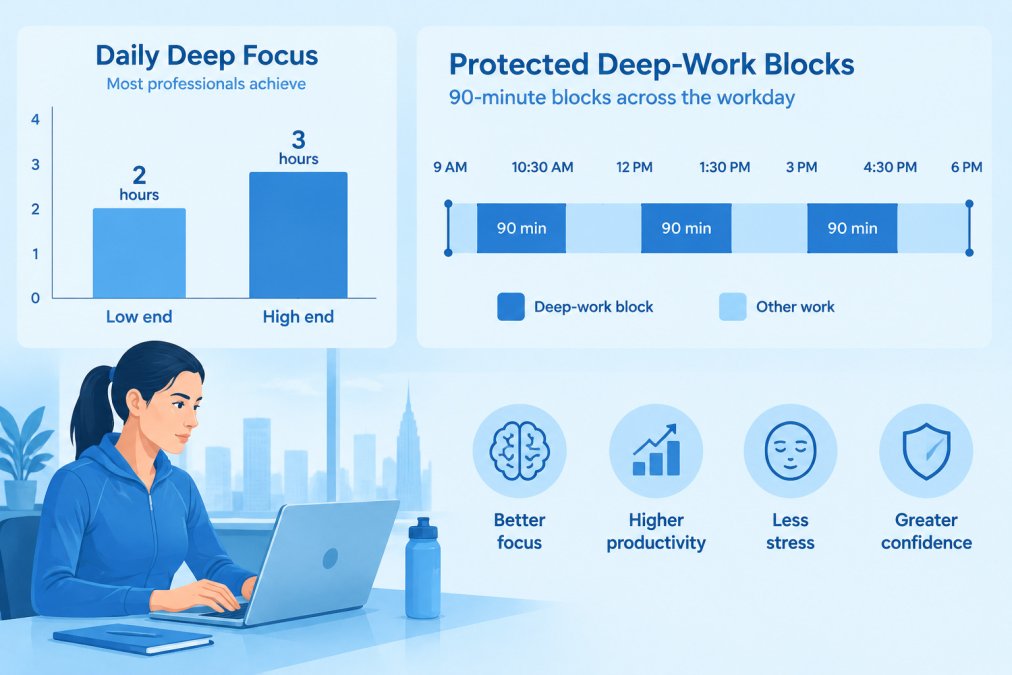
Start small. Protect one block per day, then add a second once the habit holds. Tell colleagues when your block is so they can plan around it.
2. Cut Digital Distractions and Set Communication Boundaries
Notifications are designed to interrupt. Turn off badges and banner alerts for email, chat and social apps during focus blocks. Close the browser tabs you do not need.
Set clear expectations for response times. A simple rule such as "I check messages at 10:00, 1:00 and 4:00" removes the urge to glance at the screen every few minutes. Colleagues adjust faster than most people expect.
Apps can block distracting sites on every device during scheduled sessions. For professionals who rely on their phones, keeping the device in another room during deep work often works better than any app.
3. Use Structured Work Intervals Like the Pomodoro Technique
The Pomodoro technique splits work into fixed intervals, usually 25 minutes of focus followed by a 5-minute break. The fixed deadline makes it easier to start and easier to stay on task.
Some time-tracking tools include a built-in Pomodoro timer and can record how many intervals you complete each week. Visible progress is motivating, and it shows which hours of the day you actually work best.
Adjust the interval length to fit your work. Some people focus better in 50-minute stretches. The structure matters more than the exact number.
4. Stop Multitasking and Work on One Task at a Time
Switching between tasks feels productive, but it slows every task down. Each switch forces the brain to reload the details of the previous task, which adds delay and errors.
Pick one task, write it down, and work on it until it is finished or until your interval ends. Keep a notepad nearby for stray thoughts so they can be captured without derailing your work.
This is harder than it sounds. Expect the urge to multitask to return. Each time you notice it, return to the single task.
5. Build Natural Habits: Sleep, Movement, and Light
Focus depends on the body as much as the schedule. Short sleep is one of the fastest ways to lose concentration.
Regular exercise helps too (Movement). A brisk walk at lunch is a simple way to start.
Daylight matters as well. Working near a window and taking short outdoor breaks can help maintain alertness through the afternoon.
6. Create a Focus-Friendly Workspace
Your environment sends constant signals. A cluttered desk, a visible phone and a noisy room all compete for attention. Clear the desk down to the task in front of you.
Position your screen so that it does not face a busy hallway or a window with constant movement. Noise-cancelling headphones or a consistent playlist can mask office chatter.
Use a simple shutdown routine at the end of the day. Write tomorrow's top three tasks and close open files. This reduces the mental load that follows you home and makes the next morning's focus session easier to start.
7. Plan for Interruptions and Urgent Work
Interruptions will happen. The goal is to recover quickly, not to avoid every one. Decide in advance how you will handle urgent requests, such as a colleague who needs help or a client call that cannot wait.
A practical approach: keep one short buffer block each day for urgent items. When an interruption occurs, note where you stopped, write the next step, and return to your focus block. Writing the next step takes seconds and saves minutes of re-orientation.
Review your calendar weekly to see which interruptions repeat. Patterns reveal where a boundary or process change would help most.
Strong focus is built from a few repeatable habits, not a single trick. Start with one protected block and one notification change this week, then add the rest as they become routine. Kajukenbo and Filipino Martial Arts Club applies the same principle to skill training: structured, progressive phases produce results that open-ended effort rarely does.
Frequently Asked Questions
How can I improve concentration and focus while working?
Start by protecting one or two blocks of uninterrupted time each day and turning off non-urgent notifications during them. Pairing schedule changes with sleep and exercise tends to work better than any single habit. Track which blocks produced your best output for two weeks, then keep the patterns that worked and drop the ones that did not.
What decreases focus during the workday?
The most common drains are constant notifications, switching between email and chat, unplanned meetings, and attempting to multitask. Meeting load is one of the largest controllable drains on focus. Sleep deprivation also weakens attention.
How can I increase concentration immediately?
Close unnecessary tabs and apps, put your phone out of reach, and set a timer for a 25-minute work interval. A short, clearly defined first task reduces the friction of starting. Small immediate changes help most when the environment supports them, so remove visual clutter from your desk before you begin.
How can I stay focused and productive at work if my schedule is unpredictable?
Plan for interruptions instead of hoping to avoid them. Reserve a short buffer after each meeting block, decide in advance which messages count as urgent, and tell colleagues when you will check channels. Scheduled blocking tools can enforce these boundaries without relying on willpower alone.