 How-to
Book a Martial Arts Trial Class: A Step-by-Step Guide
Table of Contents
- How to Book a Martial Arts Trial Class Without Wasting Time
- Questions to Ask Before Joining a Martial Arts School
- What to Expect at a Martial Arts Trial Class
- What to Wear to a Martial Arts Class
- Martial Arts Class Schedule for Adults: Finding Times That Work
- Common Mistakes to Avoid When Booking Your First Class
- Frequently Asked Questions
Last Updated: October 12, 2026
How to Book a Martial Arts Trial Class Without Wasting Time
Booking a martial arts trial class takes three steps: pick a style that fits your goal, contact the school to confirm availability, and lock in a date. The whole process takes about ten minutes of actual work. The hard part isn't booking. It's choosing a school that won't waste your time once you're there.
That distinction matters for busy professionals. A trial class is a test drive, and most schools treat it as a sales pitch. At Kajukenbo and Filipino Martial Arts Club, we built our trial around a different question: can you actually retain what you learn?
Here's the practical version. Below, we'll walk through each step, the questions that separate good schools from bad ones, and what to expect once you're on the mat.
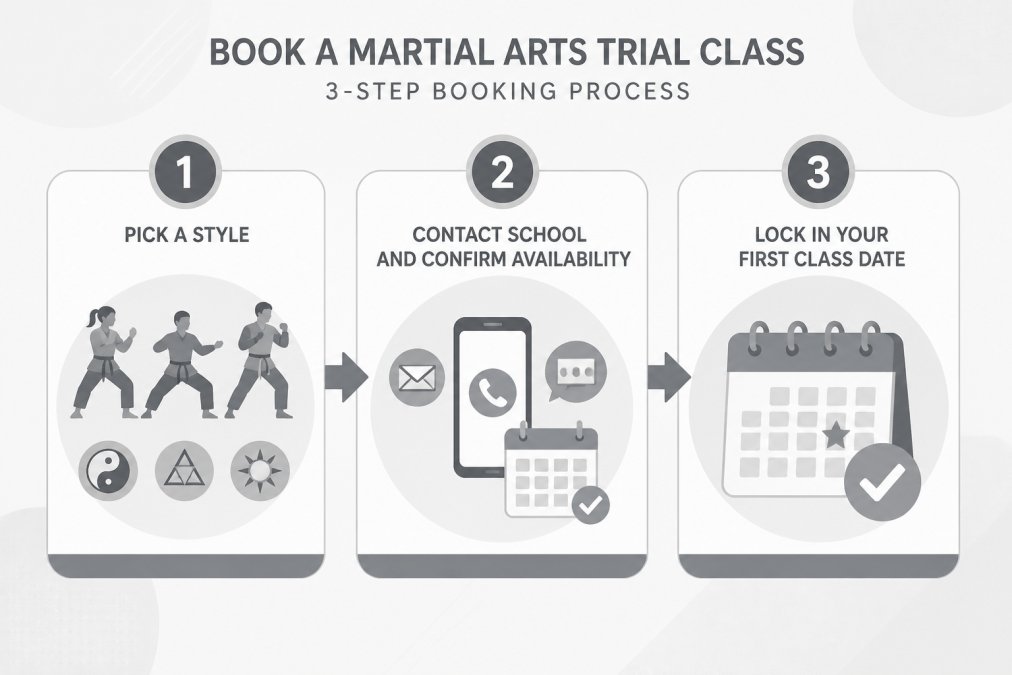
Step 1: Pick a Style That Matches Your Goal
The right style depends on what you want from training. Self-defense, fitness, competition, and stress relief pull you toward different programs.
- Self-defense focus: Kajukenbo, Filipino martial arts, Krav Maga, and Brazilian jiu-jitsu emphasize practical responses to real threats.
- Fitness and conditioning: Boxing, Muay Thai, and mixed martial arts deliver high-energy workouts that build cardio fast.
- Discipline and structure: Traditional karate and taekwondo emphasize forms, rank progression, and repetition.
- Non-combat fitness: Some adults want the movement benefits without sparring. Ask directly whether a school offers that path.
If your goal is measurable self-defense skill, weapons-based systems like Balintawak and Kalis Ilustrisimo deserve a look. They teach stick and blade concepts that translate to empty-hand defense.
Step 2: Contact the School and Confirm Availability
Call or email the school and ask three things: whether beginner spots are open, what the trial includes, and how far ahead you need to book.
Most schools respond within a day. Some only book trials on specific days, so confirm the schedule before you clear your calendar. If you travel for work, say so upfront. A school that trains busy professionals will work around your schedule. One that doesn't will push you toward a contract.
This is also your first read on culture. Does the person answering the phone know the curriculum? Do they ask about your goals? A school that treats booking as a transaction will treat your training the same way.
Step 3: Lock In Your First Class Date
Pick a date within the next week. Momentum matters, and a trial you schedule three weeks out rarely happens.
Confirm the time, the address, and what to bring. Ask whether you need to arrive early for paperwork. Then put it in your calendar with a reminder the night before.
If the school offers a free class or a low-cost trial period, ask what happens after it ends. Get this in writing before your first session.
Questions to Ask Before Joining a Martial Arts School
Ask about curriculum structure, class size, instructor credentials, and what happens after the trial. The answers tell you more than any website.
Use this checklist when you call:
- How many students per instructor in a beginner class?
- Is there a structured curriculum with defined phases, or open-ended drilling?
- What are the instructor's credentials, and do they have training in how people learn?
- Can I pause or adjust my membership if my work schedule changes?
- What's the cancellation policy?
- Do you offer adult classes at times that work before or after standard work hours?
- What does the trial include, and what happens when it ends?
The curriculum question matters most. Open-ended drilling means you repeat the same movements without a clear progression. A phased curriculum means each session builds on the last, with defined checkpoints.
What to Expect at a Martial Arts Trial Class
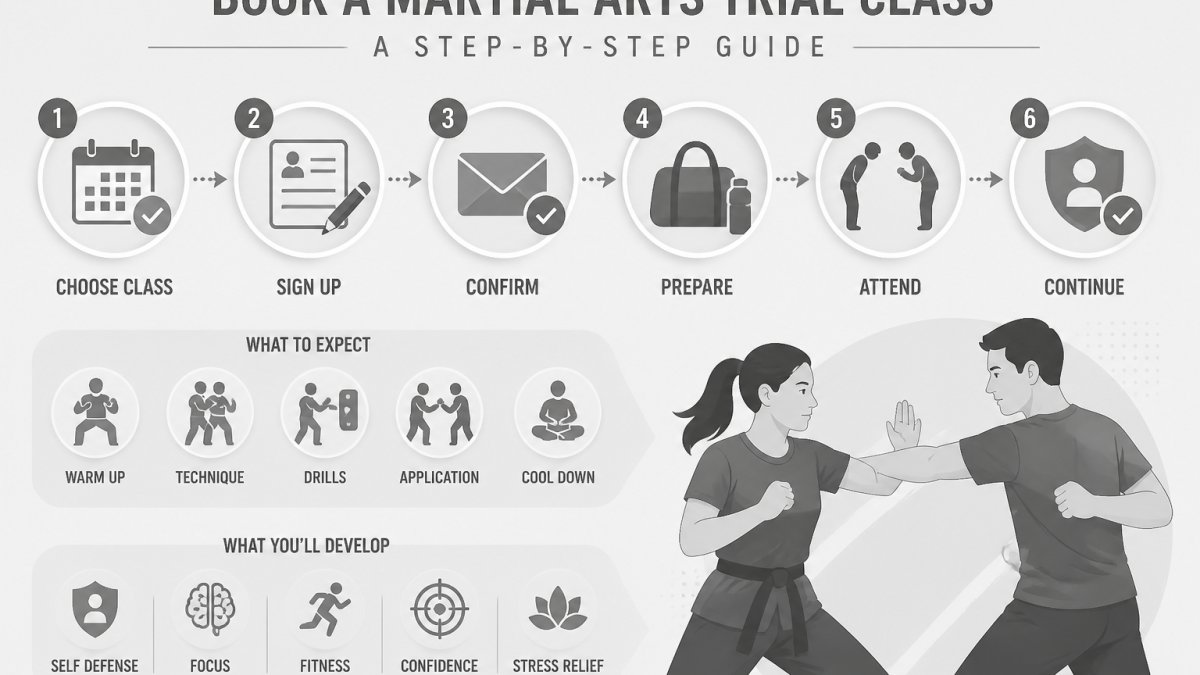
A well-run trial class starts with a warm-up, moves into technique instruction, and ends with practice or light application. You should leave knowing one or two things you couldn't do before.
Here's the typical structure:
- Warm-up (10-15 minutes): Joint mobility, light cardio, and movement prep.
- Technique instruction (20-30 minutes): An instructor demonstrates a movement, then breaks it into parts.
- Partner or bag work (15-20 minutes): You practice the technique with feedback.
- Cool-down and questions (5-10 minutes): Stretching and a chance to ask about next steps.
Class duration varies. Some beginner sessions run 30 minutes, others 60. Ask before you book so you can plan around it.
You will not be thrown into sparring on day one at any reputable school. If a trial class puts a beginner into full-contact drills, leave.
What to Wear to a Martial Arts Class
Wear comfortable athletic clothing you can move in: a t-shirt, athletic pants or shorts, and clean indoor training shoes. Most schools loan gear for a first class.
Avoid jewelry, watches, and anything with hard edges. Bring a water bottle and a small towel. If the school trains weapons, they'll provide a training stick for your first session.
For Brazilian jiu-jitsu or grappling classes, ask whether you need a gi or can train in shorts and a rash guard. For striking classes, hand wraps and gloves are usually available to borrow.
Call ahead and ask. A school that can't tell you what to wear probably hasn't thought much about the beginner experience.
Martial Arts Class Schedule for Adults: Finding Times That Work
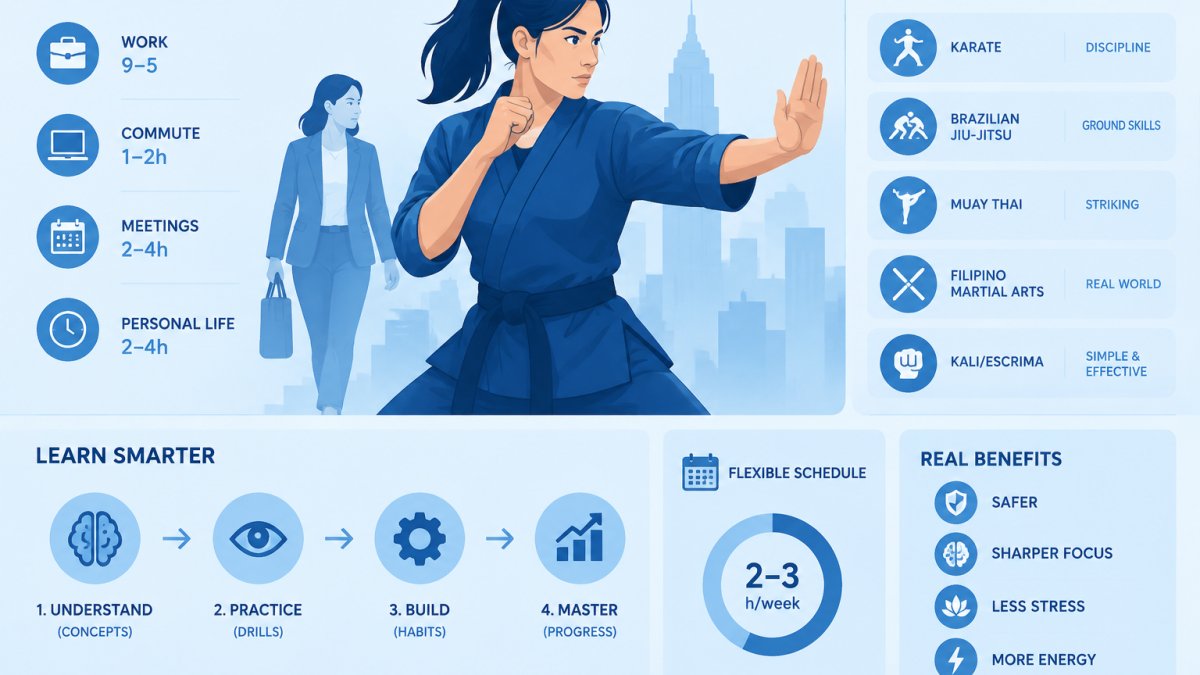
Adult classes typically run in three windows: early morning, lunchtime, and evening. The best schedule isn't the one with the most sessions, it's the one you'll actually attend twice a week for three months.
Start by mapping your real week, not your ideal one. Write down the two or three time blocks you can protect consistently. Then look for a school whose beginner classes land inside those blocks. A school with a perfect curriculum at a time you can't make is worse than an average school at a time you can.
| Time Slot | Best For | Watch Out For |
|---|---|---|
| Early morning (6-8 a.m.) | People who train before work and want a quiet mat | Fewer beginner sections; you may train alongside advanced students |
| Lunchtime (12-1 p.m.) | Remote or nearby workers | Short class duration; limited time to change and return |
| Evening (6-9 p.m.) | Most adults | Crowded beginner classes; later finish can cut into sleep |
| Weekend | Flexible schedules | Less frequent sessions; harder to build a twice-a-week habit |
Three questions decide whether a schedule actually works:
- How many beginner sessions run per week? Two or more gives you a buffer when life interferes.
- What's the class size cap? A beginner class of 20 with one instructor means less feedback per student.
- Can you make up a missed class? Some schools let you attend a different session; others don't.
A common pattern is that adults who train twice a week see steadier progress than those who cram four sessions and then miss two weeks. Consistency beats intensity, especially in the first month when your body is adapting.
If your only available window is a crowded evening slot, ask whether the school offers a beginner-only session or a smaller fundamentals class. Many do, but they don't advertise it.
Common Mistakes to Avoid When Booking Your First Class
The biggest mistake is booking without asking how the curriculum works. A school that drills the same moves every session without a progression plan will leave you stuck at the same skill level.
Other mistakes:
- Booking too far out. A trial scheduled three weeks away rarely happens.
- Skipping the style question. Signing up for a style that doesn't match your goal wastes months.
- Ignoring the schedule. A great school with impossible class times won't work.
- Not asking about the trial's end date. Know what happens when it's over.
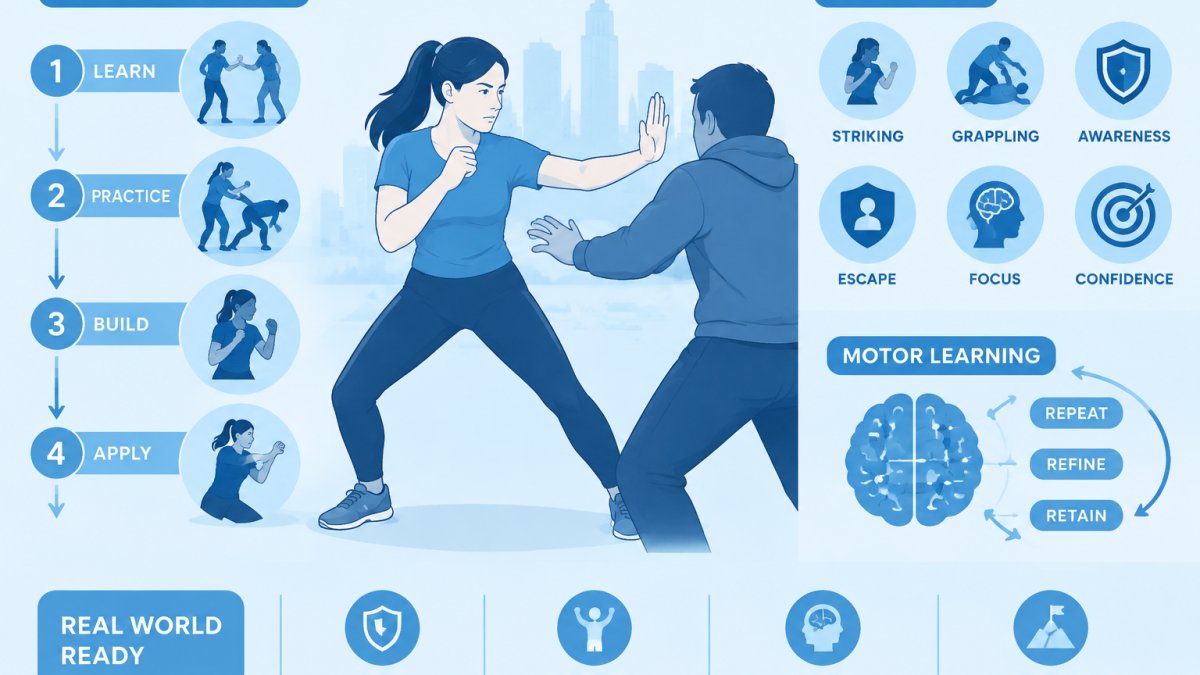
At Kajukenbo and Filipino Martial Arts Club, we structure training in dated, progressive phases. Each phase has a defined skill set, so you can see what you've learned and what's next. That structure comes from how motor learning works.
If you want to know whether a school's method actually works, ask for evidence.
Frequently Asked Questions
How do I book a martial arts trial class?
Start by choosing a style that fits your goals, then contact the school directly by phone, email, or their website booking form. Ask about available trial times, what the session includes, and whether you need to bring anything. Most schools offer a free or low-cost first class. Confirm your spot at least a few days ahead, especially for evening adult classes that fill up quickly.
Can beginners attend a martial arts trial class?
Yes. Trial classes are designed for people with no prior training. Instructors expect beginners and will walk you through basic stances, footwork, and simple techniques. You do not need to be fit or flexible to start. If a school makes you feel out of place as a beginner, that is a sign the program is not built for new students.
What should I wear to a martial arts trial class?
Wear comfortable athletic clothing you can move in, such as shorts or leggings and a t-shirt. Avoid jewelry, watches, and anything with zippers that could scratch a partner. Most schools train barefoot on mats, so no special shoes are needed. Bring a water bottle and a small towel. If the school requires a uniform for the trial, they will tell you when you book.
How long does a martial arts trial class last?
Most trial classes run 45 to 60 minutes, though some beginner sessions are as short as 30 minutes. The time typically includes a warm-up, technique instruction, partner drills, and a cool-down. Ask about class duration when you book so you can plan your schedule. Arrive 10 to 15 minutes early to sign any waivers and meet the instructor.
Finding a martial arts school that respects your time is harder than it should be. Most programs were built for people with open schedules, not professionals squeezing training between meetings. Kajukenbo and Filipino Martial Arts Club solves that with a neuroscience-based teaching method, training organized in progressive dated phases, and a Midtown Manhattan location built for people who work nearby. Book a trial class and see what structured progress actually feels like.