 blog
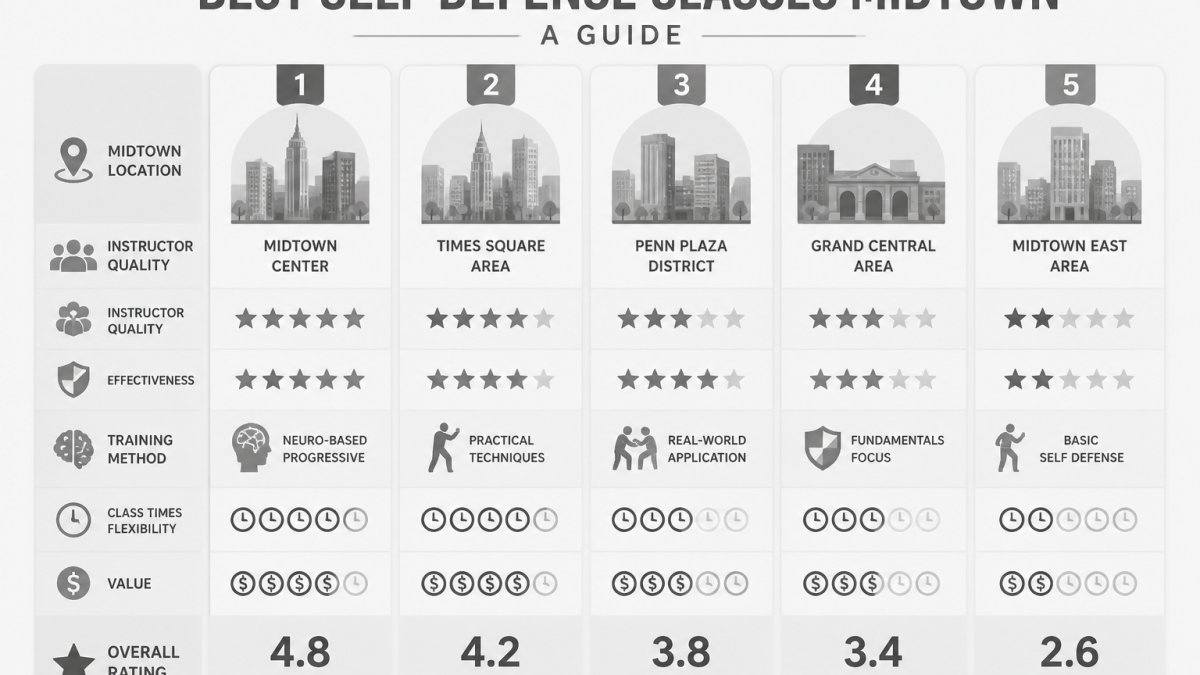
Best Self Defense Classes Midtown: A Guide
Table of Contents
- What Makes an Effective Self Defense Class in Midtown
- Beginner Self-Defense Classes: Where to Start
- Self-Defense Classes for Women in Midtown
- Martial Arts vs Boxing for Self-Defense: Which Discipline Works
- Understanding Self-Defense Class Cost and Membership Options
- How Neuroscience-Based Training Improves Skill Retention
- Getting Started: What to Expect in Your First Class
- Frequently Asked Questions
Last Updated: October 11, 2026
What Makes an Effective Self Defense Class in Midtown
The best self defense classes midtown teach techniques that stick under pressure, not movements you forget after class ends.
Kajukenbo and Filipino Martial Arts Club structures training in progressive phases grounded in neuroscience, ensuring complex self-defense concepts become reliable reflexes rather than forgotten movements.
Effective self defense classes in Midtown address specific urban threats: practical awareness, quick decision-making, and techniques for confined spaces like elevators, stairwells, and crowded streets.
Beginner Self-Defense Classes: Where to Start
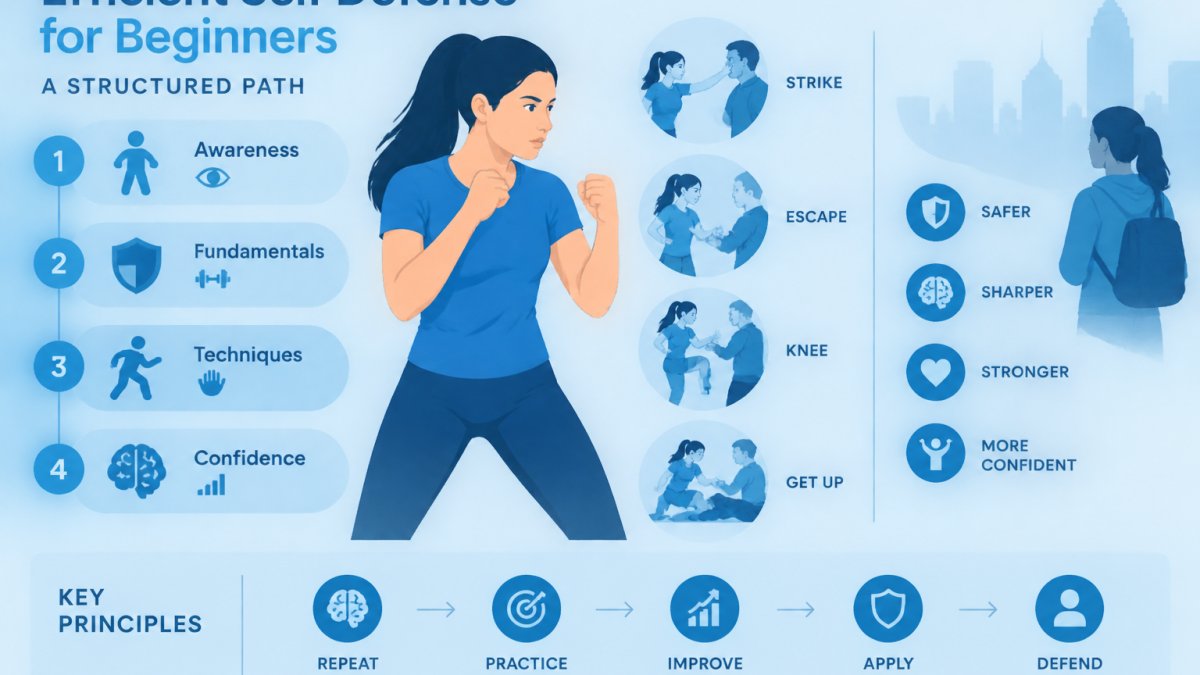
Choosing the right beginner self-defense class requires matching your primary concern to the training method most likely to address it.
Diagnostic: What's your core self-defense goal?
Before enrolling, identify which scenario concerns you most:
"I want to escape a sudden attack or multiple threats" → Krav Maga or Filipino Martial Arts. These systems prioritize rapid disengagement, awareness, and techniques for worst-case scenarios (multiple attackers, confined spaces, weapon threats). You'll recognize pre-attack indicators and move decisively toward safety.
"I want to control a single attacker or grapple safely" → Brazilian Jiu-Jitsu (BJJ) or Wrestling-based systems. Grappling-focused training teaches positional control and submissions.
"I want to develop striking speed, footwork, and distance management" → Boxing or Muay Thai.
"I want comprehensive coverage of all threat types" → Kajukenbo or similar hybrid systems.
What to expect in your first beginner class
Regardless of discipline, your first class follows a predictable arc:
Warm-up and movement assessment (5-10 minutes): The instructor observes your movement and fitness level to pitch instruction at the right intensity, then teaches foundational stance.
Drills and application (15-20 minutes): Practice the technique against light resistance at specified intensity (e.g., "50% speed, 50% power").
Cool-down and Q&A (5-10 minutes): The class ends with stretching and time to ask questions about progression.
What beginners should prioritize
Look for programs that emphasize these elements:
Safety first. Beginner classes should use controlled drills at manageable intensity, never full-contact sparring. If an instructor pushes beginners into hard sparring, that's a red flag.
Ego-free environment. The best programs explicitly encourage modifications and never pressure you to perform at someone else's level.
Legal and ethical context. Solid instruction discusses when force is justified and what constitutes reasonable self-defense.
Progressive structure. The program should have clear phases where you master Phase 1 techniques before advancing to Phase 2, preventing students from learning many techniques poorly.
Realistic scenario context. Beginner classes should reference real-world application (e.g., "This technique works in a crowded elevator because...") to ground training in actual threats.
Timeline to functional competence
With consistent training (2-3 times weekly), beginners achieve functional competence in core defensive movements within 8-12 weeks. Full proficiency requires 6-12 months of consistent training.
Consistency matters most: twice weekly for 12 weeks produces faster progress than once weekly for 24 weeks because your nervous system consolidates motor skills through repeated practice.
Self-Defense Classes for Women in Midtown
Self-defense classes for women in Midtown address specific concerns and threats requiring tailored instruction.
Effective self-defense classes for women focus on recognizing predatory behavior patterns and disengaging before physical confrontation. Training that builds awareness and projects confidence prevents violence before it starts.
In self-defense classes for women, technique selection matters. Effective techniques emphasize positioning and targeting vulnerable areas (knee strikes, elbow strikes) rather than overpowering stronger attackers.
Women-only or mixed-gender classes both work when instruction is solid; choose based on your comfort level.
Martial Arts vs Boxing for Self-Defense: Which Discipline Works
The choice between martial arts and boxing depends on your likely threats and training goals; both build fitness but emphasize different skills.
Boxing excels at footwork, hand speed, and distance management. For single-attacker threats at medium range, boxing skills transfer well to real-world self-defense.
Martial arts disciplines like Kajukenbo and Filipino martial arts teach broader toolkits covering strikes, grappling, and weapon threats. Kajukenbo combines judo, karate, kung fu, and Brazilian jiu-jitsu for practical street self-defense.
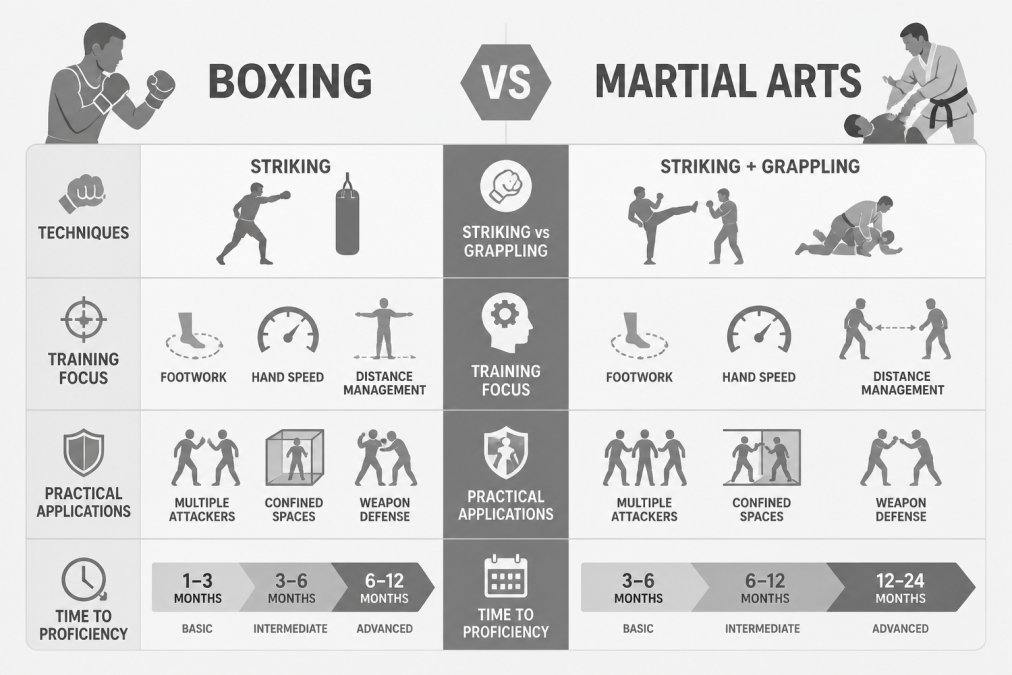
Boxing is specialized and deep; martial arts systems are broader. For urban environments with multiple-attacker or environmental hazards, martial arts provides more comprehensive preparation.
Understanding Self-Defense Class Cost and Membership Options
Self-defense class cost in Midtown varies by program structure, instructor credentials, and membership inclusions. Understanding the real cost structure upfront helps you decide.
Typical membership models in the area break down into three categories:
Drop-in classes typically cost $20-$30 per session. Most facilities offer a free or discounted trial class ($0-$15) to test instruction quality.
Monthly unlimited memberships range from $150-$250 per month for group classes, with tiered pricing for off-peak versus peak hours.
Annual prepaid memberships typically offer 15-20% savings over month-to-month rates, bringing annual costs to $1,800-$2,400 for unlimited group training. Annual commitments work best if your schedule is stable; month-to-month flexibility costs more but suits professionals with unpredictable work demands.
Private instruction ranges from $75-$150 per hour, often sold in packages of 5-10 sessions ($375-$1,500). Hybrid memberships, combining unlimited group classes with one or two monthly private sessions, cost $250-$350 monthly and appeal to professionals wanting personalized form correction alongside group training.
Commuter logistics matter as much as cost. Midtown locations near subway stations (particularly the 4, 5, 6 lines and the A/C/E lines) reduce commute friction for office workers. Ask whether the facility offers:
- Shower and locker facilities so you can train before or after work without returning home to change
- Parking validation or nearby garage partnerships if you drive
- Early morning (6-7 a.m.) or lunch-hour classes for professionals with rigid schedules
- Flexible membership pause options (typically 1-3 months per year) for busy seasons or travel
These amenities often justify a slightly higher membership cost because they eliminate the friction that causes people to quit training. A facility five minutes from your office with shower access is worth more than a cheaper option requiring a 20-minute detour.
What's included in membership also affects real cost. Some programs include:
- Access to online form videos and technique libraries
- Monthly seminars on situational awareness or legal self-defense
- Discounts on private sessions (typically 10-20% off)
- Free or discounted intro workshops for family members
- Access to a members-only community forum or group chat
Facilities that include these extras justify higher monthly fees; those charging premium prices for group classes alone may not be the best value.
Comparison framework: If you train twice weekly (8 classes monthly), a $200 monthly membership costs $25 per class. A $30 drop-in rate costs $240 monthly at the same frequency. If you're likely to train 2-3 times weekly, unlimited membership breaks even quickly.
When evaluating cost, factor in location accessibility and amenities alongside the base membership fee. The cheapest program across town may cost more in commute time and lost training days than a slightly pricier facility integrated into your daily routine.
How Neuroscience-Based Training Improves Skill Retention
Traditional self-defense training often relies on repetition: perform the technique fifty times, a hundred times, until muscle memory develops. This approach can be inefficient and frustrating for busy professionals who can only train twice weekly.
Neuroscience-based training aims to optimize how your brain encodes motor skills. Rather than mindless repetition, this methodology breaks complex techniques into component parts. You learn the foundational movement pattern first, then add complexity progressively. This staged approach leverages how the brain consolidates motor memories.
Research in motor learning suggests that varied practice conditions can produce better retention than blocked practice (The effects of practice schedules on the process of motor adaptation). Instead of drilling the same technique the same way repeatedly, effective training often varies the context, speed, and conditions. Your brain may adapt to these variations and develop more flexible, reliable skills that transfer to real situations.
Kajukenbo and Filipino Martial Arts Club applies this science directly. Our instruction, led by someone with a Master's degree in Neuroscience, structures classes in progressive phases. You master Phase 1 techniques thoroughly before advancing. This aims to prevent the common problem where students learn many techniques poorly instead of few techniques well.
Getting Started: What to Expect in Your First Class
Your first self-defense class sets the tone for your entire training journey. Knowing what to expect reduces anxiety and helps you focus on learning.
When you arrive for your first class, expect to spend time on fundamentals. The instructor will assess your current fitness level and movement patterns. This isn't a test you can fail, it's information the instructor uses to pitch instruction at the right level. You'll learn basic stance, footwork, and how to generate power from your core.
Partner drills typically happen in the second half of class. Your partner might be another beginner or an experienced student. The instructor will specify the intensity level and what you're drilling. Communication matters: tell your partner if something hurts or if you need to slow down.
Bring water and wear comfortable clothing that lets you move freely. Most programs don't require special uniforms for beginners. Arrive five to ten minutes early so the instructor can answer questions and you can get oriented to the space.
The mental aspect of your first class matters as much as the physical. You're learning new movement patterns and building new neural pathways. This feels awkward and slow initially. That's completely normal. Everyone in the class felt this way on their first day.
Finding the right self-defense classes in Midtown means prioritizing instruction quality, training methodology, and a program that fits your schedule. Our Midtown location serves busy professionals who need efficient, measurable progress in self-defense skills. Book a trial class and experience how structured, progressive training produces self-defense skills that actually stick.
Frequently Asked Questions
What should I look for when choosing self defense classes in Midtown?
Look for programs that teach practical, pressure-tested techniques rather than choreographed drills. Verify the instructor's credentials and whether the curriculum includes real-world scenarios. Check class schedules that fit your work commitments, facility safety standards, and whether the environment welcomes beginners. Ask about trial classes to assess the teaching methodology and community fit before committing.
Are beginner self-defense classes suitable for someone with no martial arts experience?
Yes. Effective beginner self-defense classes break complex techniques into manageable phases that don't require prior experience. The best programs teach foundational concepts like stance, distance management, and threat recognition before advancing to strikes or grappling. Neuroscience-based approaches aim to structure learning so your brain can absorb and retain techniques progressively, making complex skills accessible even on a limited training schedule.
How does martial arts training compare to boxing for self-defense?
Boxing excels at hand speed, footwork, and distance management through repetitive drilling. Martial arts disciplines like Kajukenbo integrate striking, grappling, and situational awareness, aiming to prepare you for multiple attack angles and varied distances. For comprehensive self-defense, martial arts offers broader technique coverage including weapon defense and multiple-attacker scenarios. Boxing alone covers one range of combat; martial arts training aims to address a broader spectrum of real-world threats.
How often do I need to train to see measurable progress in self-defense skills?
Consistency matters more than frequency. Two focused sessions per week with structured, progressive training typically shows measurable skill development within 6-8 weeks. Neuroscience-based programs aim to optimize each session so you retain techniques reliably, potentially reducing the time needed to proficiency compared to traditional open-ended drilling. Quality of instruction and methodology can affect results more than raw hours spent training.