 blog
Deliberate Practice vs Traditional Repetition: Which Builds Skill?
Table of Contents
- Deliberate Practice vs Traditional Repetition: Core Differences
- Deliberate Practice Examples: Real-World Application
- How to Practice a Skill Effectively: The Role of Feedback
- How Long to Practice a Skill: Quality Over Duration
- Building a Deliberate Practice Session: A Practical Template
- When Traditional Repetition Fails Under Pressure
- Choosing Your Training Method: A Decision Framework
- Frequently Asked Questions
Last Updated: October 21, 2026
Deliberate Practice vs Traditional Repetition: Core Differences
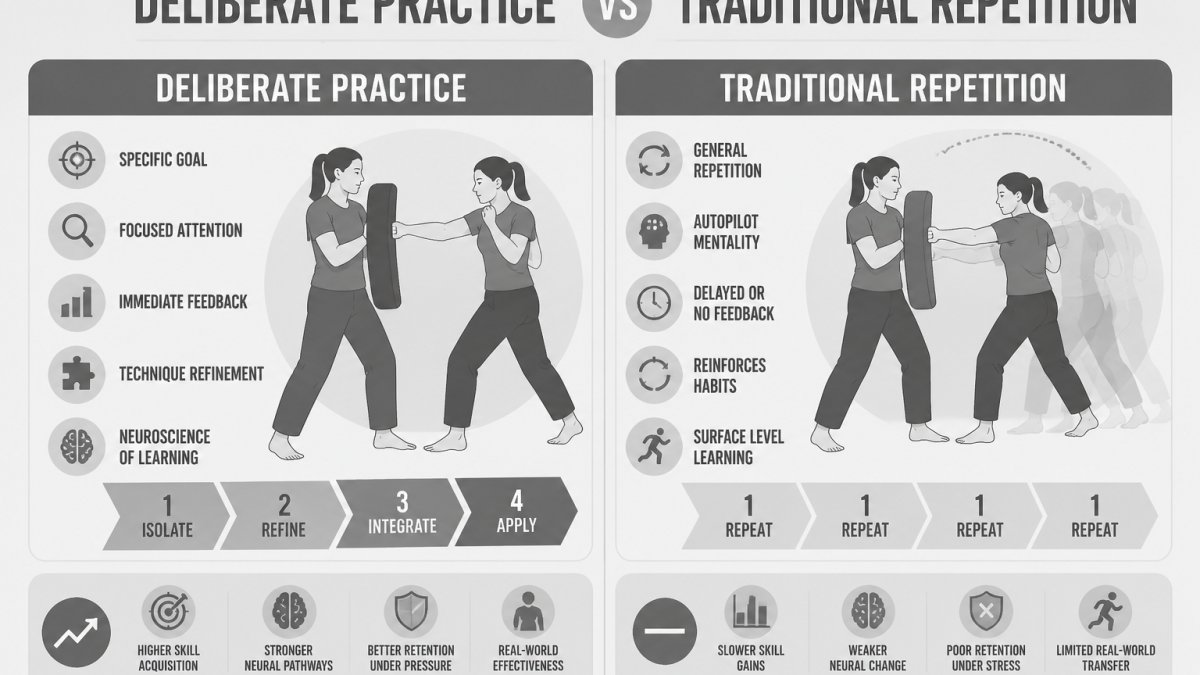
The difference between deliberate practice and traditional repetition comes down to intention and structure. Deliberate practice is goal-driven training with real-time feedback and progressive challenge; traditional repetition repeats the same movement without targets or course correction.
At Kajukenbo and Filipino Martial Arts Club, we've seen this distinction reshape how professionals learn self-defense. Practice with clear goals and feedback and skills stick; just drill and they fade under pressure.
What Makes Deliberate Practice Structured
Deliberate practice builds skill through focused repetition on specific weaknesses. Each session targets a narrow skill gap. You know what you're working on, why it matters, and how to measure progress.
The structure matters more than the hours logged. A 30-minute deliberate practice session with targeted feedback beats three hours of unfocused drilling.
Key elements that separate deliberate practice from casual training:
- Clear goals: Work on one specific skill, not "get better"
- Immediate feedback: Know if you did it right, wrong, or partially right
- Progressive challenge: The difficulty increases as you improve
How Traditional Repetition Works (and Where It Falls Short)
Traditional repetition means doing the same drill over and over: show up, practice the technique 50 times, leave. With no feedback loop, progression, or measurement, it feels productive but doesn't build reliable skills.
Where traditional repetition breaks down:
- Mistakes get reinforced instead of corrected
- You plateau quickly because there's no progression plan
- Skills don't transfer to real pressure situations
The brain needs novelty and challenge to keep learning. Pure repetition removes both.
Deliberate Practice Examples: Real-World Application
Self-Defense Skill Acquisition Through Structured Phases
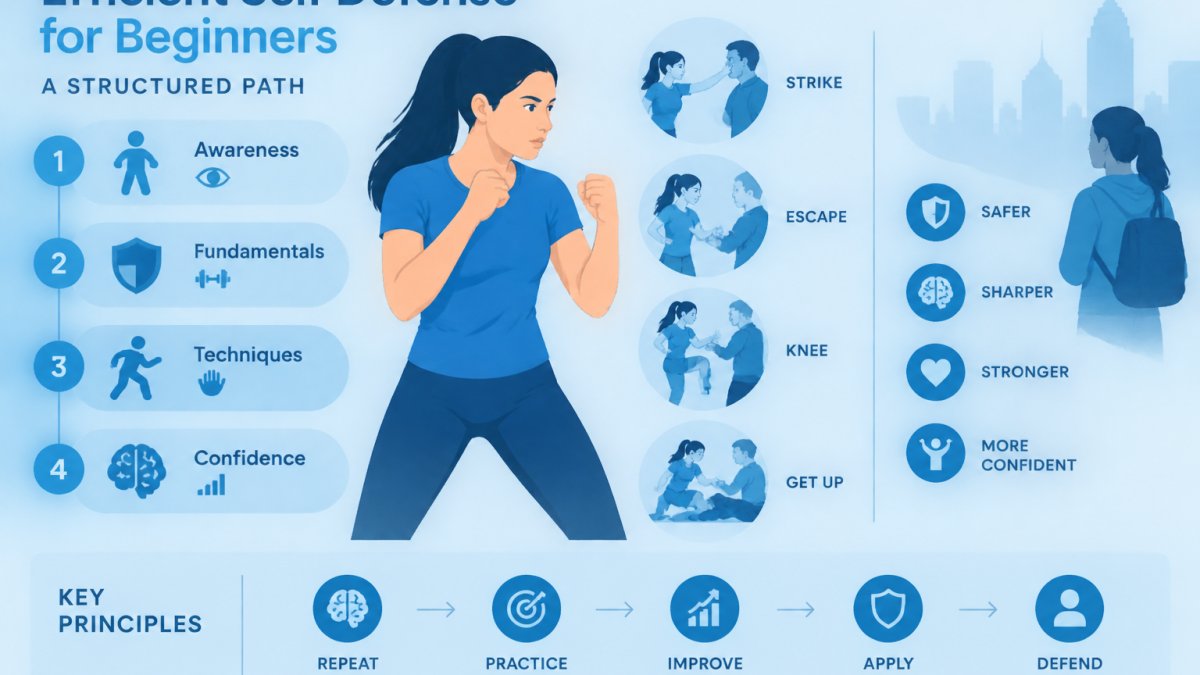
Self-defense training works best in clear phases: one builds basic mechanics, two adds pressure, three tests skills under realistic conditions.
Each phase has specific goals, and you don't advance until you've mastered the current level, preventing gaps in your foundation.
A typical deliberate practice progression for self-defense:
- Phase 1: Learn the movement slowly with full attention to form
- Phase 2: Increase speed while maintaining accuracy
- Phase 3: Add resistance from a partner
This structure separates training that works from training that doesn't: by phase five, your body knows what to do even under stress.
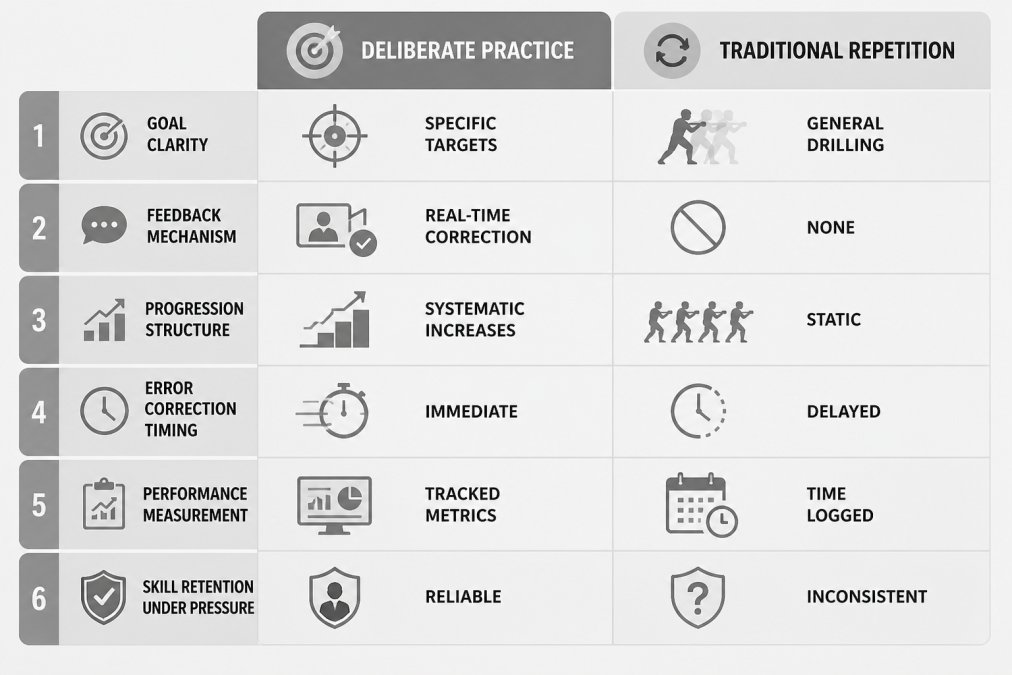
Direct Comparison: Deliberate Practice vs Traditional Repetition
Here is the comparison side by side.
| Dimension | Deliberate Practice | Traditional Repetition |
|---|---|---|
| Primary purpose | Fix a specific weakness and build reliable skill | Build general familiarity and muscle memory for a drill |
| Structure | Narrow target, clear goal, planned progression | Open-ended drilling, same drill repeated |
| Feedback | Real-time correction from coach, partner, or measurable results | Minimal or delayed feedback; often none |
| Difficulty | Progressively increased as skill improves | Static; same resistance and speed each session |
| Error handling | Mistakes caught and corrected immediately | Mistakes reinforced through repetition |
| Measurement | Tracked metrics: accuracy, speed, error rate, transfer | Time logged or repetitions completed |
| Outcome under pressure | Reliable execution in stressful, realistic conditions | Inconsistent; skill often breaks down under stress |
| Best for | Complex, high-stakes skills with real consequences | Simple, low-stakes skills or warm-ups |
| Time to proficiency | Faster for complex skills when feedback is available | Slower; may plateau without progression |
| Coaching need | Essential for best results | Optional |
Deliberate practice is not just "better repetition" but a different training design with different inputs and outcomes. Traditional repetition has its place, but it cannot produce the same reliability under pressure.
Comparing Outcomes: Deliberate vs Repetitive Training
Deliberate practice produces skills that hold up under pressure; traditional repetition often breaks down when things get real. Consider a professional learning stick defense: with deliberate practice, they progress through focused phases with measurable milestones, so the technique works under pressure.
How to Practice a Skill Effectively: The Role of Feedback
Feedback in Deliberate Practice: Real-Time Correction
Feedback is the engine of deliberate practice: without it you're just repeating; with it you're learning. Real-time feedback means knowing immediately whether you did something right, letting your brain adjust on the next repetition, and these micro-adjustments build precision. That feedback loop can be shaped by how practice is delivered, since face-to-face and online training each create different opportunities to notice errors and adjust, as Eyzon Health & Safety makes clear.
The best feedback comes from three sources:
- Your own awareness: Can you feel when you're doing it correctly?
- A partner or coach: Do they see what you're missing?
- Measurable results: Does the technique work when tested?
When feedback is delayed or absent, your brain fills gaps with guesses that often embed mistakes deeper.
Why Feedback Matters More Than Time Spent
Hours of practice without feedback don't build skill; hours with feedback do. Measuring progress by time invested sounds impressive until you test the skill under pressure and it fails. What matters is feedback density: how often you got corrected, adjusted, and measured whether the adjustment worked.
One hour with expert feedback and real-time correction often produces more skill growth than ten hours of solo drilling.
How Long to Practice a Skill: Quality Over Duration
Measuring Progress Beyond Hours Logged
Stop counting hours. Start counting improvements.
Real progress looks like:
- Performing the skill faster without losing accuracy
- Maintaining the skill under pressure or fatigue
- Executing the skill in new contexts you haven't drilled
Hours logged is the worst metric because it rewards time-wasting: 100 hours of poor drilling teaches less than 10 hours with focus and feedback. Track what actually changed: faster? More accurately? Under stress? In new situations? Those metrics matter.
A Practical Framework for Tracking Progress
Use these six measures to evaluate any skill, whether physical, cognitive, or workplace-related:
-
Accuracy: What percentage of repetitions are performed correctly? Track this by having a partner or coach mark each attempt as correct, partially correct, or incorrect. Aim for a clear trend upward over sessions.
-
Speed: How fast can you execute the skill while maintaining accuracy? Time a set number of repetitions and record the average. Speed should increase without accuracy dropping.
-
Error rate: How many mistakes per 10 repetitions? This is the inverse of accuracy but useful for spotting patterns. If the same error appears three times in a row, that is your next target.
-
Retention: Can you still perform the skill a week later without practice? Test yourself after a gap. If the skill fades quickly, your encoding was shallow.
-
Transfer: Can you use the skill in a context you did not drill? For self-defense, this means a different attacker angle, a different environment, or a different speed. Transfer is the strongest sign of real learning.
-
Performance under pressure: Can you execute the skill when stressed, fatigued, or surprised? Add a pressure element (time limit, loud noise, unexpected resistance) and see if the skill holds.
A simple tracking method: keep a training log with columns for date, target skill, accuracy percentage, average speed, error count, and a note on pressure conditions. Review the log every two weeks. If accuracy is flat or error rate is not dropping, change your practice design, not your hours.
How Long Should a Deliberate Practice Session Last?
A focused deliberate practice session typically runs 40 to 60 minutes; beyond that, attention and feedback quality drop. Short, intense sessions with clear targets beat long, unfocused ones. For self-defense, a common pattern is three to four focused sessions per week, each targeting one narrow skill. The key is feedback cycles per session: 20 corrected repetitions beat 100 uncorrected ones.
Building a Deliberate Practice Session: A Practical Template
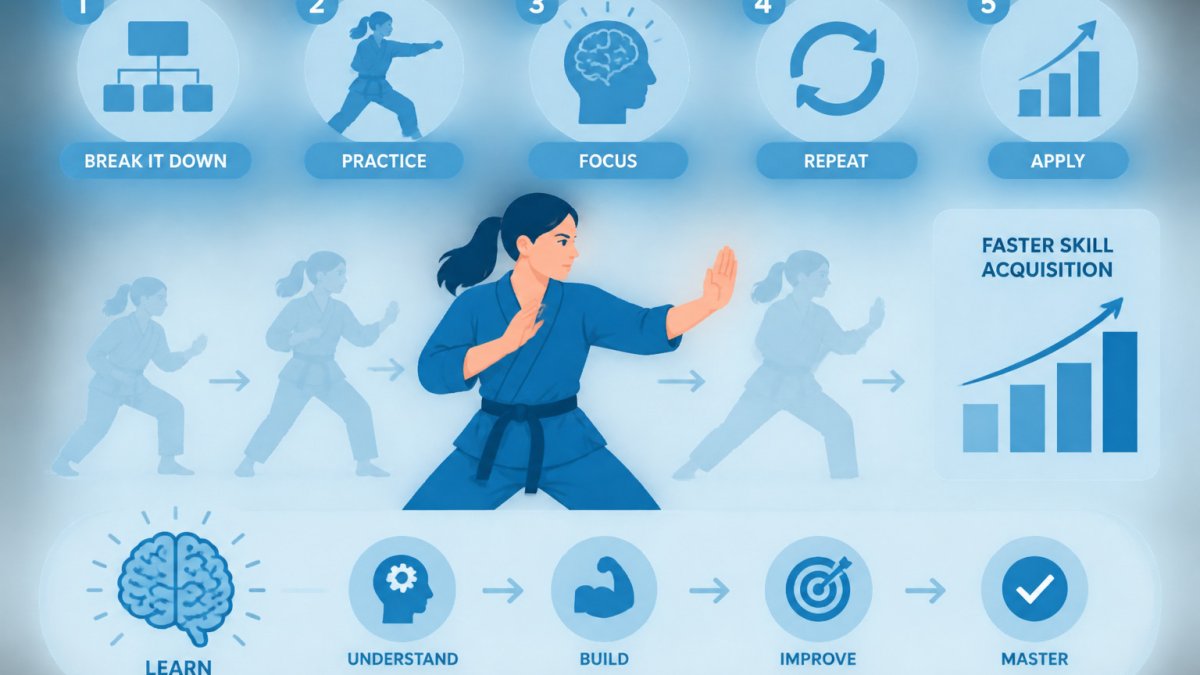
A deliberate practice session has a clear structure, not open-ended drilling. Here's how to build one:
1. Define the target skill (5 minutes) Pick one specific movement or scenario. Not "get better at stick defense." Pick "improve my defensive angle on a thrust from the right side."
2. Warm up and establish baseline (5 minutes) Do the skill a few times at comfortable speed.
3. Focused repetition with feedback (20-30 minutes) Perform the skill. Get feedback immediately. Adjust. Repeat.
4. Progressive challenge (5 minutes) Add difficulty. Faster speed, more resistance, time pressure, or unexpected variations.
5. Cool-down and reflection (5 minutes) Review what improved. What still needs work?
Total session time: 40-50 minutes. Quality matters more than duration.
When Traditional Repetition Fails Under Pressure
Traditional repetition builds muscle memory for the drill, not for reality. When pressure hits, your nervous system reverts to what's deeply encoded; if you've only drilled calmly, the technique breaks the moment stress or speed increases. This is why people freeze in real situations despite "training for years", they trained the drill, not the skill. Deliberate practice prevents this by progressively adding pressure, so your nervous system learns to execute under stress.
Choosing Your Training Method: A Decision Framework
Use this framework to decide which approach fits.
Choose deliberate practice if:
- You need skills you can rely on under pressure
- You have limited time and need efficient learning
- You want to measure progress objectively
Choose traditional repetition if:
- You're learning something simple and low-stakes
- You have unlimited time and just want to build familiarity
- You don't need the skill to work under pressure
For self-defense, the choice is clear. You need skills that work when it matters. That requires deliberate practice.
| Approach | Best For | Time to Proficiency | Pressure Reliability | Feedback Need |
|---|---|---|---|---|
| Deliberate Practice | Complex skills, high stakes, limited time | Faster | High | Essential |
| Traditional Repetition | Simple skills, low stakes, unlimited time | Slower | Low | Optional |
At Kajukenbo and Filipino Martial Arts Club, we build training around deliberate practice principles. Our neuroscience-based methodology breaks complex techniques into structured phases. You get real-time feedback.
The difference between training that sticks and training that doesn't isn't luck. It's structure. Research on motor learning and skill acquisition shows that structured, feedback-rich training produces more reliable skills than unguided repetition. Studies on deliberate practice in athletic performance confirm that focused training with progressive challenge outperforms time-based approaches. Neuroscience research on stress and motor performance demonstrates that skills practiced under realistic pressure transfer better to real situations.
Book a trial class and experience the difference deliberate practice makes. See how structured training with real-time feedback accelerates your skill acquisition and builds confidence you can actually rely on.
Frequently Asked Questions
What is the key difference between deliberate practice and traditional repetition?
Deliberate practice uses structured goals, immediate feedback, and targeted correction of specific weaknesses. Traditional repetition involves repeating the same movements without systematic feedback or progression. Research shows deliberate practice produces faster skill acquisition and better performance retention. The critical distinction: deliberate practice identifies performance gaps and closes them; repetition simply reinforces whatever you're already doing, including mistakes.
Can deliberate practice improve performance under pressure?
Yes. Deliberate practice builds skill through progressive challenge and error correction in controlled conditions that simulate real-world pressure. Because the training targets specific weaknesses and uses feedback to refine technique, the nervous system encodes more reliable motor patterns. Traditional repetition without feedback often creates brittle skills that break down under stress. Structured, progressive training, especially in self-defense, transfers better to high-pressure situations.
How often should you practice a new skill to see measurable progress?
Frequency matters less than quality. Two focused sessions per week with structured feedback and targeted correction outperform five unfocused repetition sessions. Progress depends on whether each session identifies and corrects specific errors, not total hours logged. For busy professionals, shorter deliberate practice sessions (30-45 minutes with clear goals and feedback) produce faster, measurable skill gains than longer, unstructured drilling. Consistency and structure trump duration.
What role does feedback play in deliberate practice?
Feedback in deliberate practice is immediate, specific, and corrective. It identifies exactly what went wrong and how to fix it, not just whether performance was good or bad. Real-time feedback from an instructor allows learners to adjust technique mid-session, reinforcing correct patterns. Without feedback, repetition simply strengthens whatever movement pattern you're performing, correct or incorrect. This is why coaching or expert guidance accelerates skill acquisition dramatically compared to solo drilling.