 How-to
Martial Arts for Stress Relief: A Practical Guide
Table of Contents
- How Martial Arts for Stress Relief Actually Works
- The Benefits of Martial Arts for Stress, Anxiety, and Mood
- Martial Arts for Focus and Concentration
- Choosing a Style Based on Your Stress Triggers and Needs
- Beginner Martial Arts Training: A Practical First 30 Days
- Safety, Injury Prevention, and When to Modify Training
- How to Evaluate a Class Environment and Track Your Progress
- Frequently Asked Questions
Last Updated: October 19, 2026
How Martial Arts for Stress Relief Actually Works
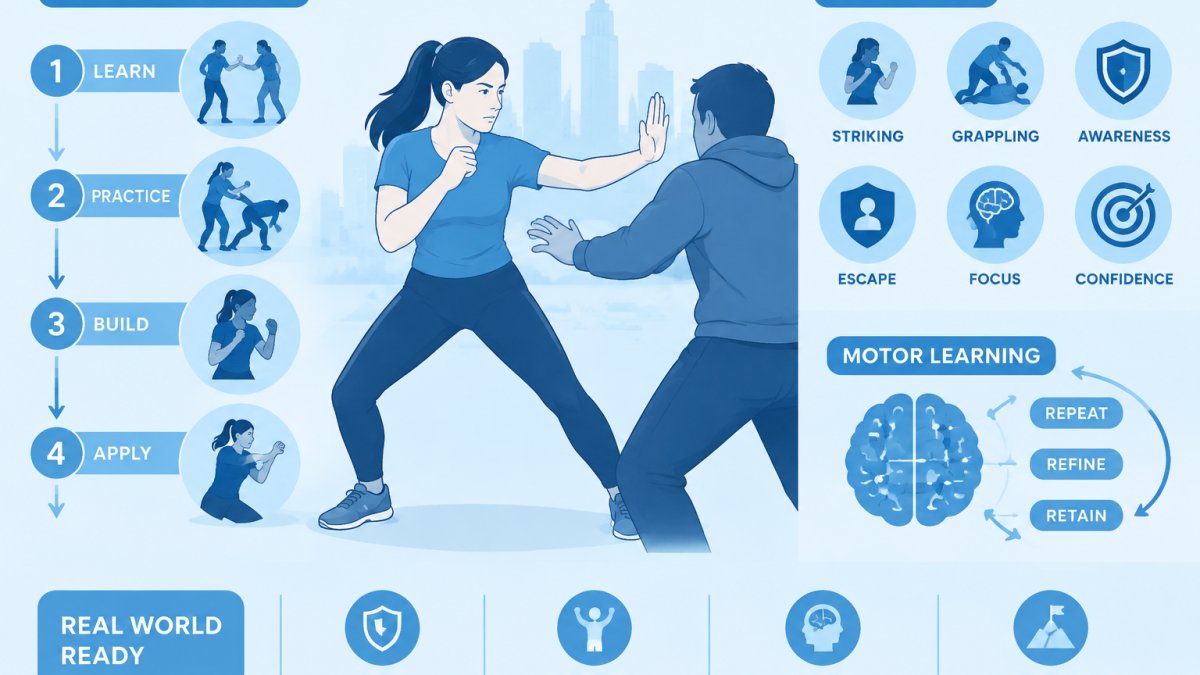
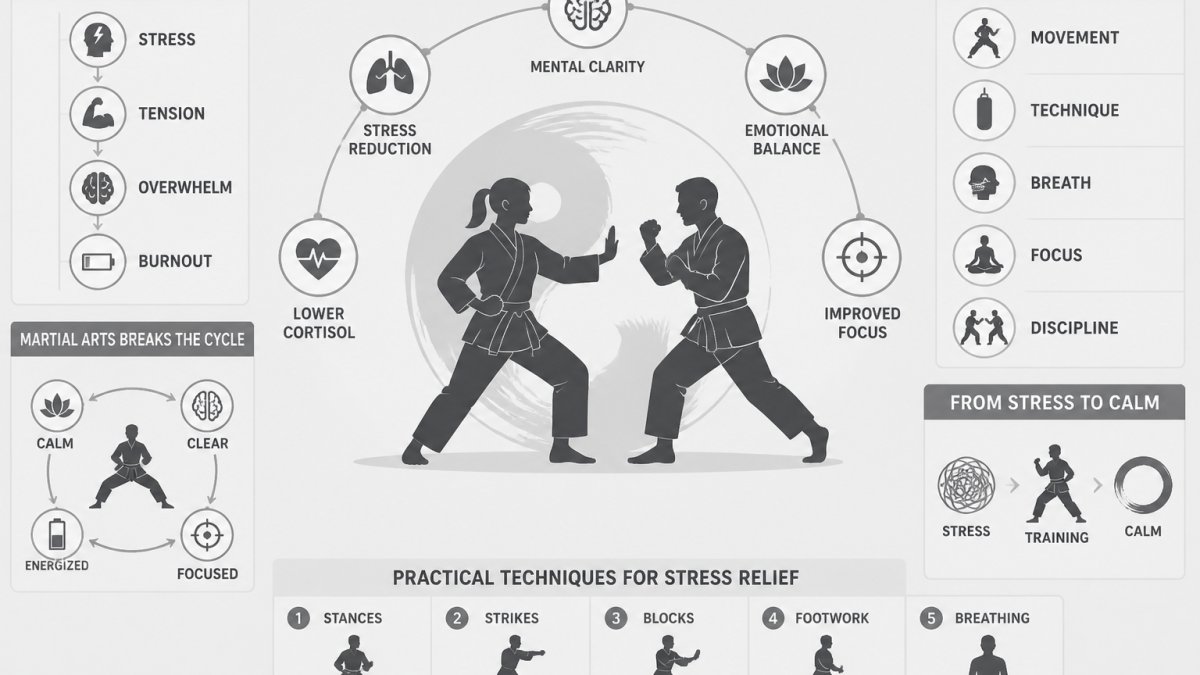
Martial arts for stress relief works because it combines hard physical effort with deliberate attention control. You hit something, you breathe on purpose, and your attention narrows to one task. That combination is what separates a useful training session from a workout you sleepwalk through.
Here is the part most guides skip. The stress response is a whole-body event: heart rate climbs, muscles tighten, breathing goes shallow, and attention scatters. A good class interrupts all four at once. Kajukenbo and Filipino Martial Arts Club teaches with that in mind, breaking skills into dated, progressive phases so your attention has one clear job per session.
The Physiology: Endorphins, Tension Release, and Mood
Vigorous exercise triggers endorphin release, and the CDC guidance on physical activity and mental health notes that regular movement measurably improves mood and reduces anxiety. Striking and grappling add something a treadmill cannot: full-body tension release. You push, pull, and rotate against real resistance, which discharges the physical charge that stress builds up. Studies on exercise and mood consistently show the effect is strongest when the effort is moderate to hard and repeated weekly.
The Mental Side: Breath Control and Present-Moment Focus
Breath control is the fastest lever you have. Slow, deep breathing activates the parasympathetic branch of the nervous system, which pulls heart rate down. Pair that with a drill that demands present-moment focus and you get two stress tools in one rep. This is the core of meditation in motion: attention on one target, one breath, one movement.
The Benefits of Martial Arts for Stress, Anxiety, and Mood
The benefits of martial arts for stress come from repetition, not from any single class. Training builds coping mechanisms the same way it builds technique: through practice under mild pressure. You learn to notice tension, reset your breath, and act anyway.
Mood lifts first. Most people feel calmer within an hour of a hard session, and that short-term effect is what keeps them coming back long enough to build resilience. Emotional regulation improves next, because you practice staying composed while someone pushes toward you. Confidence follows last, and it tends to be the most durable of the three.
- Tension release: striking and grappling discharge physical stress
- Mood: vigorous exercise lifts mood quickly
- Resilience: controlled pressure builds tolerance for real stress
- Self-control: drills reward calm, precise movement over force
Martial Arts for Anxiety: What Training Can and Cannot Do
Martial arts for anxiety helps with the physical side of anxiety: the racing heart, the shallow breath, the restless energy. Training gives those sensations a productive outlet and teaches you to calm them on command.
What training cannot do is treat clinical anxiety on its own. If anxiety interferes with sleep, work, or daily function, pair training with professional mental health support. Think of the class as one strong tool, not the whole toolkit.
Martial Arts for Focus and Concentration
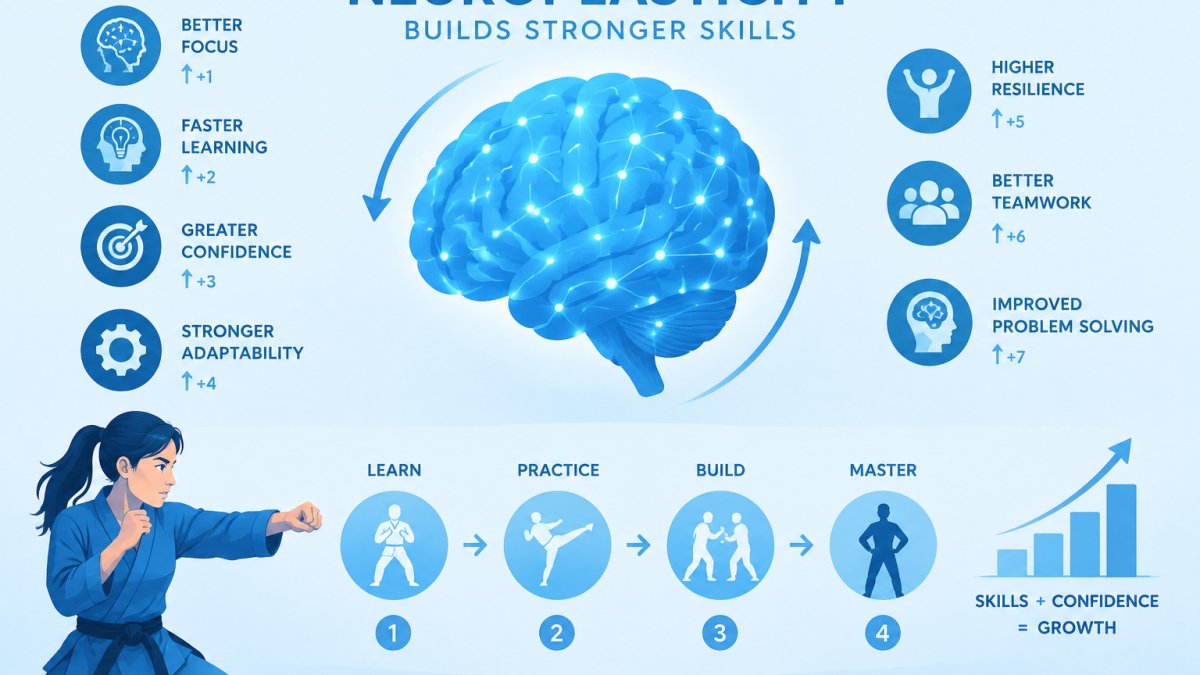
Martial arts for focus and concentration trains attention the way a coach trains a muscle: with short, repeated demands. A drill that lasts thirty seconds forces you to lock in completely. You cannot drift and still block on time.
This is where structured progression matters. Random drilling lets attention wander. Dated phases with clear targets give your brain a specific problem to solve each session, and mental focus improves as a byproduct of solving it. The discipline carries into work: you get better at holding one task, and better at dropping a distraction.
Choosing a Style Based on Your Stress Triggers and Needs
Most style guides list arts and their benefits. That is not useful when you are standing in a stressful life and trying to decide where to spend two evenings a week. A better approach is to match the style to how your stress actually shows up, and to your body, your schedule, and your comfort with contact.
Start with three questions:
- How does your stress show up physically? Restless energy and a short fuse point toward striking arts. Tight shoulders, shallow breath, and a racing mind point toward slower, breath-led movement. Feeling physically powerless or easily startled points toward close-contact control arts that teach you to stay calm when someone is in your space.
- How much contact can you tolerate right now? Contact level is the single biggest predictor of whether you will stick with a class. If you flinch at the idea of being grabbed, start with a striking art or Tai Chi and revisit grappling later. If you want to learn to stay calm under pressure, a controlled grappling class is hard to beat.
- What kind of learning environment helps you relax? Some people focus best in a loud, high-energy room. Others shut down. Visit a class and watch how the instructor talks to beginners before you decide.
Use this comparison to narrow the field:
| Style | Contact Level | Pace | Learning Environment | Best Fit For |
|---|---|---|---|---|
| Karate | Low to moderate | Moderate | Structured, rank-based | Scattered attention, need for order |
| Muay Thai | Moderate to high | Fast | High-energy, group-focused | Restless energy, physical tension |
| Judo | Moderate to high | Moderate | Partner-heavy, technical | Feeling physically powerless |
| Brazilian Jiu-Jitsu | Moderate to high | Moderate | Problem-solving, close contact | Overthinking, mental looping |
| Tai Chi | None | Slow | Calm, individual | Chronic muscle tension, joint sensitivity |
| Kajukenbo | Moderate | Moderate to fast | Practical, self-defense focused | Wanting skill and stress relief together |
Two practical filters before you commit:
- Physical needs: If you have knee, back, or shoulder issues, ask whether the class can scale jumps, falls, and takedowns. Tai Chi and modified striking drills are usually the easiest to adapt. Grappling arts can be adapted too, but you need an instructor who will show you how.
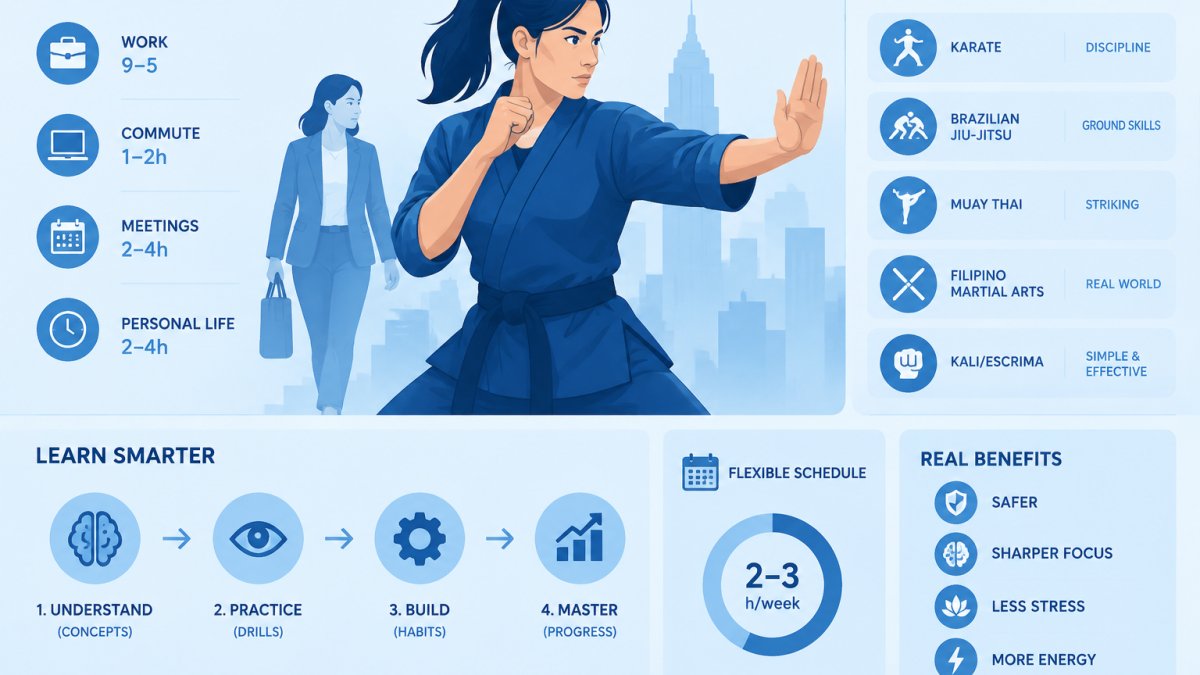
- Schedule and recovery: A style you love but can only attend once a week will not build the repetition that stress relief depends on. Two sessions a week is a realistic minimum for most beginners. If a style demands more recovery than your body is ready for, start with a lower-contact option and add intensity later.
A common pattern is to try one class in two different styles before committing. Feel matters more than the brochure. Pay attention to how you sleep the night after each class, that is often the clearest signal of whether the style is helping.
Beginner Martial Arts Training: A Practical First 30 Days
A beginner plan should answer three questions: how often to train, how to recover, and how to tell whether it is working. Most guides skip the third. Here is a first-month structure you can actually follow.
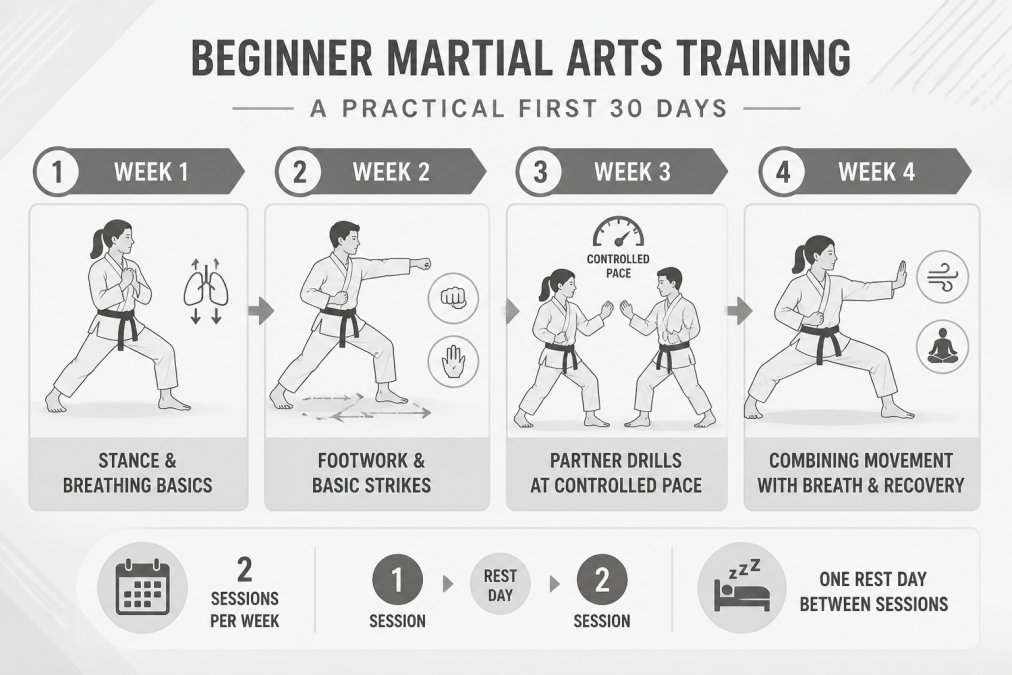
Frequency and recovery. Two sessions a week for four weeks is the sweet spot for most beginners. That is enough to build a habit without overwhelming a busy calendar or a body that is not used to the work. Leave at least one full day between sessions.
Here is the plan we would give a new student:
- Week 1, Stance and breath. Learn your stance, guard, and where to breathe in each drill. Ten minutes of slow footwork on off days. Goal: finish each session feeling calmer than when you walked in.
- Week 2, Footwork and two basic strikes. Add movement and two strikes at an easy pace. Keep the focus on breath, not power. Goal: stay relaxed through a full round.
- Week 3, Partner drills at controlled speed. Work with a partner at a pace you can control. Focus on staying calm and signaling early. Goal: notice tension and reset your breath mid-drill.
- Week 4, Combine movement, breath, and recovery. Put the pieces together and add a short cool-down. Goal: finish the month with a routine you can repeat.
How to tell whether it is helping. Keep a simple log. After each session, note three things: your stress level before and after on a 1-10 scale, how you slept that night, and one skill you practiced. Over four weeks, look for patterns rather than a single good or bad day.
When to modify the plan. If you are injured, exhausted, or sick, scale back rather than push through. Tell your instructor before class, not after. A good program will offer a modified version of every drill. If a school has no way to modify, that tells you something about the school.
Safety, Injury Prevention, and When to Modify Training
Injury prevention starts with warm-up and honesty. A ten-minute warm-up that raises heart rate and moves joints cuts strain. Then train at a pace you can control. Most beginner injuries come from ego, not contact.
Modify training when you are injured, exhausted, or sick. Tell your instructor before class, not after. Good programs offer scaled versions of every drill. If a school has no way to modify, that tells you something about the school.
- Warm up for at least ten minutes
- Learn to tap or signal early in partner work
- Skip hard contact when sleep or recovery is poor
- Ask for a scaled drill instead of sitting out
How to Evaluate a Class Environment and Track Your Progress
Evaluate a class on three things: how the instructor corrects students, how beginners are treated, and whether the space feels controlled. A good instructor gives specific corrections. Beginners get scaled drills, not ignored. And partner work has clear rules.
Track progress in a simple log. Note your session date, one skill you practiced, and your stress level before and after on a 1-10 scale. Over a month, you will see patterns. Measuring stress-related outcomes over time beats guessing.
Solo practice and group training differ here. Solo work builds breath control and focus. Group training adds pressure and feedback. Use both.
At Kajukenbo and Filipino Martial Arts Club, our neuroscience-based method trains in dated, progressive phases, so progress is something you can actually see. If you want a structured path, book a Trial Class.
Frequently Asked Questions
Is martial arts good for anxiety?
Training gives you a structured outlet for nervous energy and a repeatable way to practice staying calm under mild pressure. The breath work, repetitive movement, and focus on technique can lower the feeling of being overwhelmed. That said, martial arts for anxiety works best as one part of a broader plan. If anxiety interferes with sleep, work, or daily function, pair training with a licensed mental health professional rather than treating class as a substitute for care.
Which martial art is best for stress relief?
There is no single best style. What matters is the match between the style and what stresses you out. Tai Chi and other slow forms suit people who need to downshift. Boxing, Muay Thai, and Karate give a vigorous, full-body workout that burns off tension. Judo and Brazilian Jiu-Jitsu add close-contact problem solving. If you want measurable skill progression alongside stress relief, a structured program with dated phases and clear benchmarks will keep you motivated longer than open-ended drilling.
How often should you practice martial arts for stress relief?
Two sessions per week is a realistic starting point for busy schedules and is enough to build a habit and notice mood changes. Consistency matters more than volume early on. Once two classes feel routine, add a short 10-15 minute home practice of breathing and basic movement on off days. Track how you feel after each session for a month so you can see whether the schedule is working rather than guessing.
Can martial arts help with chronic stress?
Regular physical activity, including martial arts training, supports stress management by giving you a consistent outlet, improving sleep quality for many people, and building a sense of control through skill acquisition. Chronic stress usually has multiple sources, so training is most useful alongside sleep, nutrition, and professional support where needed. If you have a medical condition or are returning from injury, clear training with your doctor before starting.
Stress does not wait for a free weekend, and neither should your plan for handling it. Kajukenbo and Filipino Martial Arts Club builds training around measurable progress, with progressive dated phases, a curriculum spanning Kajukenbo, Balintawak, and Kalis Ilustrisimo, and instruction led by a Master's degree holder in Neuroscience. Book a trial class and see how structured training changes the way you handle pressure.