 How-to
Stick and Blade Training Benefits: A 2026 Guide
Table of Contents
- The Stick and Blade Training Benefits for Self-Defense
- Key Filipino Martial Arts Benefits for Busy Professionals
- Getting Started: Filipino Martial Arts Training for Beginners
- Essential Stick Training Exercises for Skill Development
- Blade Training Safety: Protocols and Protective Equipment
- How to Measure Progress in Stick and Blade Training
- Conclusion
- Frequently Asked Questions
Last Updated: October 16, 2026
The Stick and Blade Training Benefits for Self-Defense
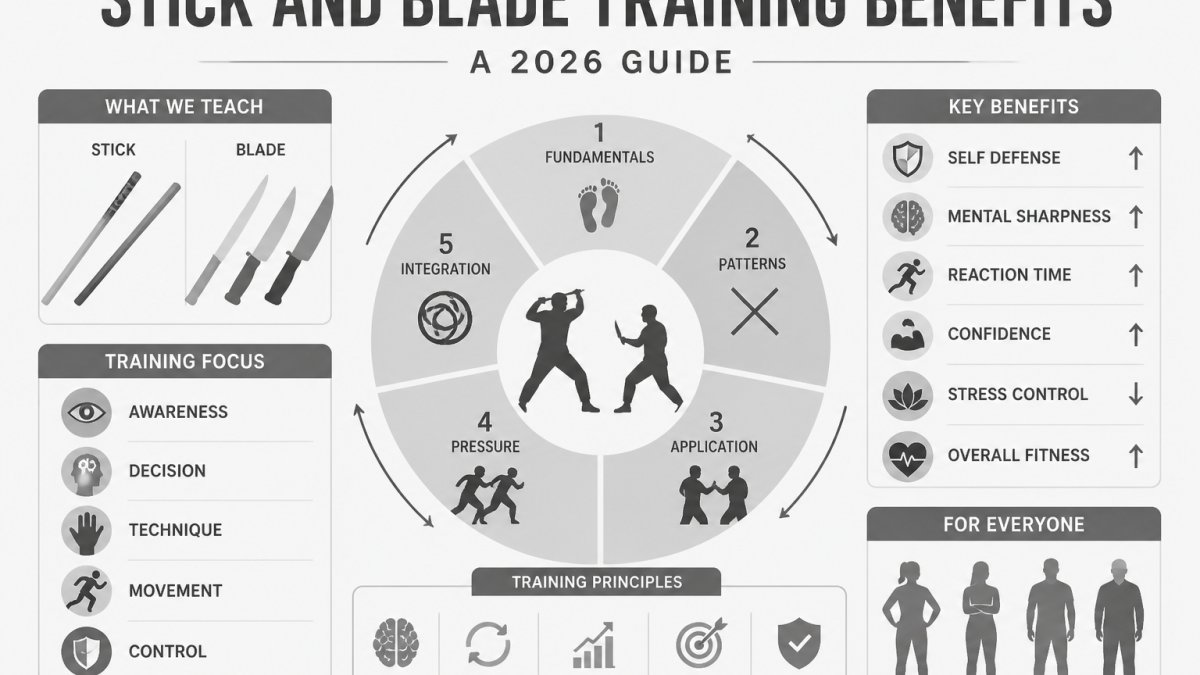
Stick and blade training benefits come down to one idea: a weapon is a magnifier. It teaches your body to generate force, control distance, and react under pressure in ways empty-hand drills alone rarely match. At Kajukenbo and Filipino Martial Arts Club, we build every class around that principle.
Here is the part most beginners get wrong. They assume weapons training is advanced work for experienced martial artists. In practice, the opposite is often true. A stick makes the mechanics of power and timing easier to feel because the feedback is immediate and unmistakable.
So what does that mean for you? A short, structured block of stick and blade work can sharpen coordination, reflexes, and calm under stress faster than many people expect.
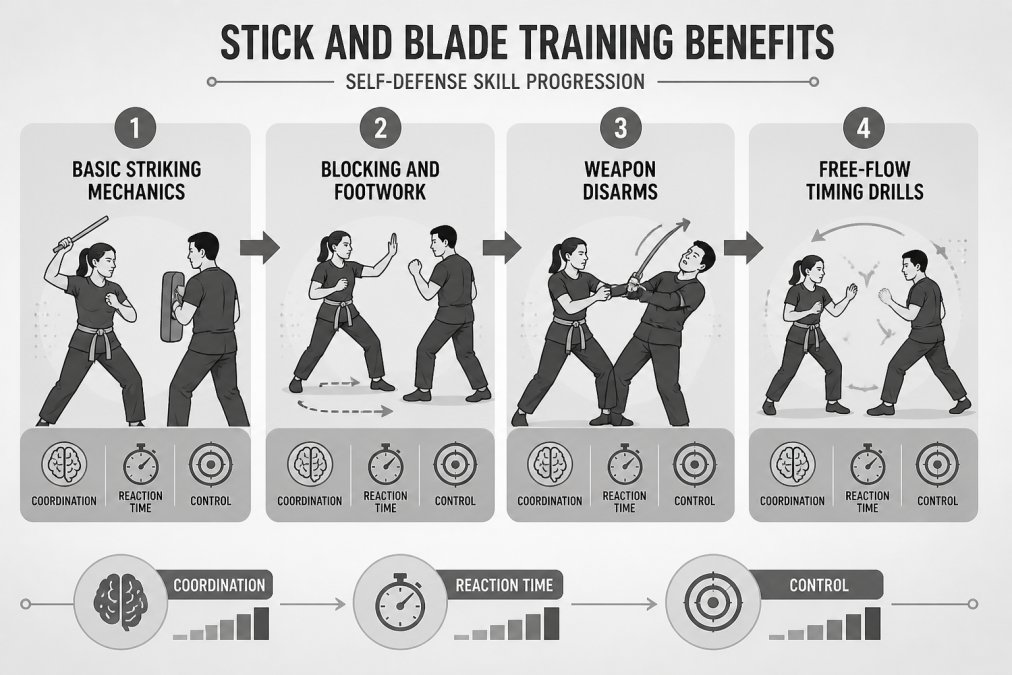
Physical Benefits: Coordination, Reflexes, and Power Generation
The physical payoff starts with how you move. Filipino martial arts training develops coordination by forcing both hands to work, often at the same time. Your dominant side stops doing all the work.
Reflexes improve through repeated, varied reps. You learn to read a strike early and respond without thinking. That is reaction time you can train, not a fixed trait.
Power generation is the third piece. A stick teaches you to drive force from the ground, through your hips, and out to the target. This is the same chain that powers an empty-hand strike. Once you feel it with a weapon, you can apply it without one.
- Coordination: both hands, both sides, working together
- Reflexes: early reads and faster responses
- Power: force from the ground up, not just the arm
- End velocity: speed at the moment of impact
Mental Benefits: Stress Management and Focus Under Pressure
The mental side is where stick training surprises people. A fast drill demands full attention. There is no room to replay your workday when a stick is coming toward you.
That forced focus works like a reset. Many students tell us the hour after class is the calmest part of their week. The reason is simple: you cannot worry and track a moving target at the same time.
Pressure training also builds composure. You practice staying calm while something moves fast. Over time, that calm carries into tense moments off the mat.
Key Filipino Martial Arts Benefits for Busy Professionals
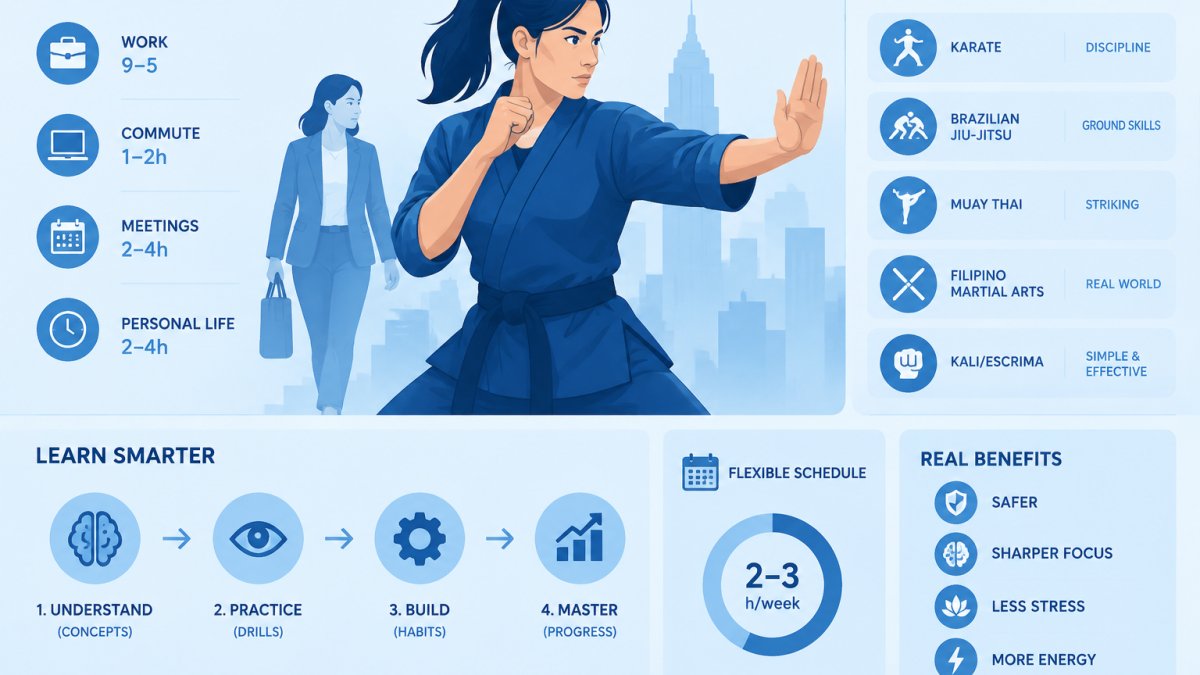
Filipino martial arts benefits fit a packed schedule better than most people assume. The systems are built around efficiency, not endless forms.
Weapons come first in many Filipino systems. That sounds odd, but it works in your favor. You learn one set of angles and footwork that applies to a stick, a blade, or an empty hand. You are not learning three separate arts. You are learning one set of principles with three expressions.
For a professional with limited time, that overlap matters. Every hour of practice feeds several skills at once.
- Transferable angles: the same lines work across weapons and empty hands
- Short learning loops: skills build in clear, dated phases
- Less wasted time: no long detours into unrelated material
- Practical focus: techniques aimed at real defensive situations
This is also where a structured method helps. Random drilling leaves gaps. A clear progression closes them.
Getting Started: Filipino Martial Arts Training for Beginners
Filipino martial arts training for beginners does not require prior experience. You can start from zero, and most people do.
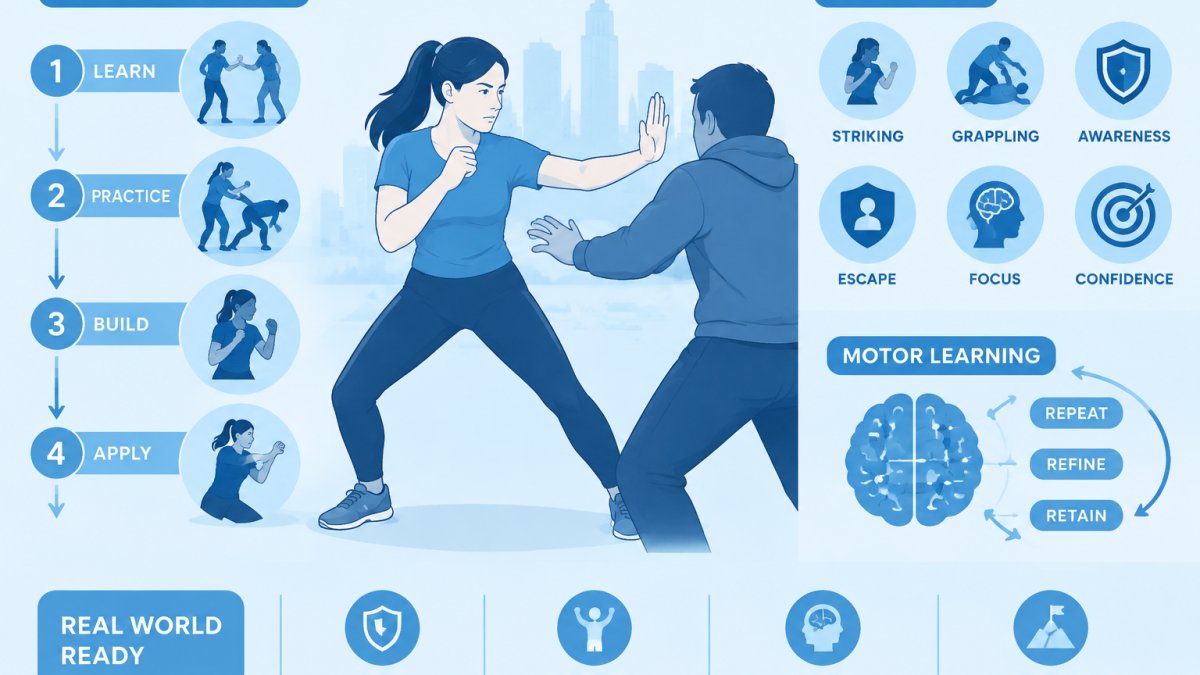
The first weeks focus on basics: stance, footwork, and the core angles of attack. You practice slowly. Speed comes later, once the movement is clean.
A good beginner path looks like this:
- Learn the basic stance and how to hold a stick
- Drill the main striking angles on a pad or target
- Add simple blocks and counters
- Practice footwork and distance control
- Introduce partner drills at slow speed
- Build timing and sensitivity with light contact
- Progress to disarms and free-flow work
If you are coming from another martial art, expect some habits to fight you. The grip and the angles may feel strange at first. Give it a few sessions before you judge it.
Essential Stick Training Exercises for Skill Development
A drill list is not a training plan. What follows is a staged progression with a purpose for each drill, a safety parameter, and a clear criterion for moving to the next stage. This is the part most articles skip.
Stage 1: Foundational Mechanics (Weeks 1-4)
Goal: clean, repeatable movement at slow speed.
- Grip and stance drill. Hold the stick with a relaxed grip, thumb aligned along the shaft. Practice the basic stance until you can hold it for two minutes without tension in your shoulders.
- Single-angle strikes. Strike one angle on a pad or heavy bag, 20 reps per side. Focus on the kinetic chain, not speed.
- Static footwork. Step forward, back, and to each side without striking. Add the stick only after the steps feel automatic.
Advance when: you can strike one angle 20 times per side without losing your stance or gripping hard.
Stage 2: Multi-Angle and Movement (Weeks 5-10)
Goal: strike on multiple lines while moving.
- Angle ladders. Strike angles 1 through 5 in sequence, then reverse. 3 sets of 10 per side.
- Moving strikes. Strike while stepping forward, then while stepping back. The step and the strike should land together.
- Pad drills with a partner. Partner calls an angle, you strike it. Start at half speed.
Advance when: you can hit a called angle on the first try, at half speed, without stopping your feet.
Stage 3: Partner Sensitivity and Timing (Weeks 11-20)
Goal: respond to a live partner instead of a script.
- Sensitivity drills. Light contact, slow pace. The goal is to feel pressure and respond, not to win.
- Block-and-counter. Partner strikes one angle, you block and counter. 10 reps, then switch roles.
- Hanging stick work. A suspended stick swings back at you. Strike it and recover in one motion. This trains timing and accuracy without a partner.
Advance when: you can complete 10 block-and-counter reps at half speed without losing your grip or your footing.
Stage 4: Disarms and Free-Flow (Month 6+)
Goal: apply skills under light, controlled pressure.
- Disarm drills. Slow, cooperative reps first. Speed only after the mechanics are clean.
- Free-flow timing drills. Light contact, agreed intensity, clear stop signal. This is where timing, reflexes, and composure come together.
Advance when: you can free-flow for two minutes at agreed intensity without losing control or needing to reset.
Safety Parameters for Every Stage
- Eye protection on for all partner work, no exceptions.
- Training blades only. Never live steel in drills.
- Agreed stop signal before any partner drill begins.
- Speed increases only when the slow version is clean.
- Clear, uncluttered training space with room to move in all directions.
How to Know You Are Improving
Track the same three things every month, with the same partner and the same pace:
| What to Track | Beginner Sign | Advanced Sign |
|---|---|---|
| Reaction time | Reacts after the strike starts | Reads the preparation |
| Accuracy | Hits the target most reps | Hits the target at speed |
| Control | Grips tight, recovers slowly | Grips relaxed, recovers fast |
Repeatable tests beat feelings. If you cannot describe what improved and when, you are guessing.
Blade Training Safety: Protocols and Protective Equipment
Blade training safety starts with one rule: respect the edge, always. Even a dull training blade teaches habits you will keep. Treat every blade as live.
Protective equipment is not optional. At minimum, wear eye protection and gloves. Add a training partner who follows the same rules.
- Eye protection on for all blade work
- Gloves to protect the hands and wrists
- Training blades only, never live steel in drills
- A clear, agreed stop signal between partners
- Controlled speed, increased only with skill
- A clean, uncluttered training space
Speed is the other trap. Partners push the pace before the technique is solid. Slow, correct reps beat fast, sloppy ones every time. Add speed only when the movement is clean and controlled.
How to Measure Progress in Stick and Blade Training
Progress in stick and blade training is measurable if you track the right things. Feelings lie. Records do not.
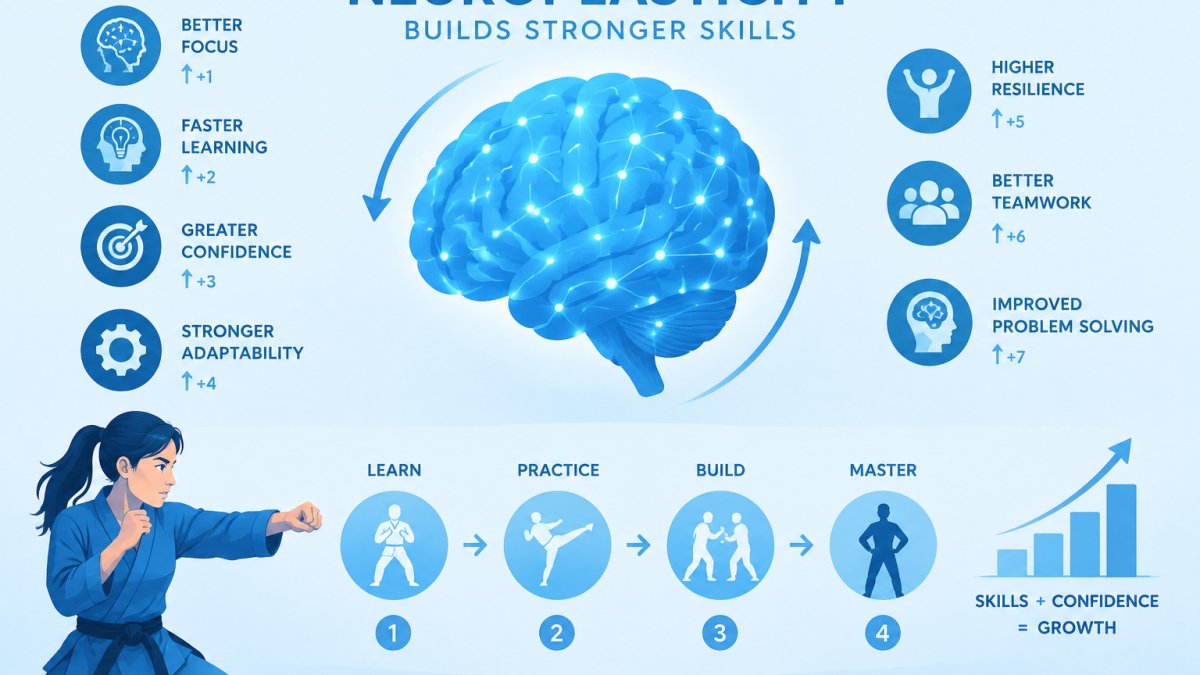
We break progress into dated phases. Each phase has a clear target, so you always know where you stand. This is where the neuroscience of motor learning helps. Skills move from clumsy to automatic in stages, and each stage has signs you can spot.
Track these markers:
| What to Track | Beginner Sign | Advanced Sign |
|---|---|---|
| Reaction time | Reacts after the strike starts | Reads the strike early |
| Accuracy | Hits the target most reps | Hits the target at speed |
| Footwork | Stops to strike | Moves and strikes as one |
| Timing | Counts the beat | Feels the beat |
| Control | Grips tight | Grips relaxed, recovers fast |
Test yourself the same way each month. Same drills, same partner, same pace. The comparison tells you more than any single session.
Conclusion
Learning to move with a weapon under pressure is a skill, and like any skill it rewards a clear plan. Random practice scatters your effort. Structured, phased training compounds it.
At Kajukenbo and Filipino Martial Arts Club, we teach stick and blade concepts through a neuroscience-based method. Our instruction is led by a Master's degree holder in Neuroscience, and we break complex skills into progressive, dated phases. That structure is what makes techniques easier to learn and more reliable when it counts.
Ready to see how it works for you? Book a trial class and find out what measurable progress feels like.
Frequently Asked Questions
What are the main benefits of stick and blade training?
Stick and blade training offers a wide range of benefits, including improved coordination, faster reaction time, and increased striking power. It also builds mental resilience and confidence under pressure. The training teaches you to defend against blunt and edged weapons, which is a critical self-defense skill. Because it incorporates footwork and timing, it provides a full-body workout that enhances overall fitness and reflexes.
Can stick training improve coordination and reaction time?
Yes, stick training is excellent for improving coordination and reaction time. The drills require you to track a moving object, react quickly, and execute precise movements. This enhances hand-eye coordination and speeds up your reaction time. The repetitive nature of the exercises also builds muscle memory, allowing you to respond faster to threats. These improvements are measurable and carry over into other physical activities.
How do beginners safely learn stick and blade techniques?
Beginners learn safely through a progressive approach that prioritizes control and protective equipment. Start with padded sticks and training blades, and always wear safety gear like gloves and eye protection. Focus on basic strikes, blocks, and footwork before moving to partner drills. A qualified instructor should supervise all training to ensure proper technique and safety protocols are followed, reducing the risk of injury.
Do Filipino martial arts train with both sticks and blades?
Yes, Filipino martial arts training often includes both sticks and blades. Systems like Kali and Arnis teach stick fighting first, as the stick serves as a safe learning tool for blade techniques. The movements and angles are similar, so skills transfer easily. Once you understand the stick, you can apply the same principles to a blade. This progression makes learning edged weapons safer and more efficient.